
Thank you for Subscribing to Transportation Review Weekly Brief
Transportation Review: Specials magazine
For transload facilities, safety compliance is not just another requirement. It determines whether facilities remain operational, risk is controlled and growth plans move forward. Gaps in compliance shows up as shutdowns, fines, operational bottlenecks and incidents that can stall or permanently alter a facility’s trajectory. Transload facilities and short-line operators need partners who assume responsibility for sustaining compliance, not firms limited to one-time deliverables. Axiom Rail Services fills that role. It operates as the compliance infrastructure behind high-risk transload operations, taking full ownership of the regulatory burden to reduce operational risk, prevent disruption and keep facilities moving. It embeds itself in customer operations through long-term partnerships and stays accountable for long-term planning. “When compliance fails, operations stop. We exist to make sure compliance never becomes the customer’s burden,” says Joseph J. Porro, president. That responsibility spans the rail compliance lifecycle, from the development of FRA-recognized rulebooks to in-field training aligned to federally defined job tasks and ongoing regulatory monitoring. Axiom’s newest area of growth—track inspection—completes the picture by managing one of the highest-risk compliance areas to prevent service disruption. The full-scope approach stands apart from one-off audits and generic training sessions. Axiom’s engagements often evolve into multi-year relationships, allowing operational familiarity to build and compliance programs to steadily improve.
Top Maritime Solutions 2026
At the height of the pandemic, nearly one hundred ships sat at anchor off the West Coast as marine terminals slowed to a standstill. A surge of cargo from Asia collided with chassis shortages and labor constraints across warehouses, distribution centers, and the waterfront. With terminals running out of space and vessels unable to discharge, port authorities faced an urgent question. If land could be converted into near-dock container yards, who could establish operations fast enough to keep cargo moving? That call landed with Pacific Terminal Services Company, part of The Pacific Companies’ operating group and widely recognized as a premier provider of container yard services on the West Coast. Drawing on deep operational roots and a workforce accustomed to high-pressure environments, the company stepped in to help ports convert large properties into fully functioning near-dock container yards almost overnight. The Pacific Companies, a family-owned maritime group with more than 30 years of West Coast experience, was founded in 1990 by Joseph Gregorio Sr. Beginning his career as a welder, Gregorio expanded Pacific Crane Maintenance Company into terminal operations, labor management, and cargo movement. This growth paved the way for the establishment of PTSC and, later, Ocean Alliance Logistics in 2021, which added trucking services and chassis leasing programs. The company’s strength lies in its ability to operate across the full spectrum of the maritime supply chain, delivering coordinated solutions from dock to door. The Pacific Companies recognizes the importance of alignment across carriers, terminals, IEPs, and trucking companies and positions itself as a facilitator of efficiency, coordination, and shared outcomes..
Top Marinas and Waterfront Wifi Solutions 2026

Connectivity has become an implicit signal of operational maturity for modern marinas. As core systems, such as billing, access control, security and environmental monitoring move to the cloud, the network has become the connective tissue that sustains continuity. What was once considered a guest amenity is now being engineered and governed as infrastructure, alongside power, water and waste management. Beacon Wifi operates at the intersection of infrastructure engineering and operational stewardship—a convergence that has become central to how modern marinas are evaluated. Working in close partnership with marina owners, it designs and manages the digital nervous system that supports waterfront operations. Since Beacon treats connectivity as governed infrastructure rather than a service layer, marinas can safely depend on their networks for security, access control and revenue operations — and that dependency is what defines its category leadership in 2026. The Stewardship Model One aspect that makes Beacon’s network stronger is that it is grounded in the realities of the marine environment rather than in assumptions from land-based networks. Along the waterfront, Radio frequency (RF) conditions differ fundamentally: salt fog corrodes hardware, tides constantly shift the network's vertical plane and steel and fiberglass vessels move unpredictably..
Flagging and Traffic Control Services
LJ Traffic Control is a trusted traffic management and flagging service provider, recognized for its rapid response time and unwavering commitment to safety. With industry-leading operational reliability, it is a preferred partner for utility providers and construction contractors throughout the Cincinnati Tri-State, Northern Kentucky, Columbus and beyond. Whether drawing up non-engineered traffic control plans, supporting complex line crossing operations that many competitors avoid or deploying certified traffic control professionals overnight to keep projects on schedule, LJ Traffic Control brings professionalism, agility, and a high standard of care. These differentiators make it a valued partner on every job site. Its in-house training program provides a clear competitive advantage. Every team member, from schedulers to senior leadership, holds active flagger certification, ensuring hands-on expertise and a coordinated, all-hands response when urgent field situations arise. “We prioritize safety and distinguish ourselves by focusing on quality over quantity," says Michael Hayslip, director of operations. LJ Traffic Control boasts a dedicated, ATSSA-certified flagger instructor who conducts a five-hour, in-person certification course provided by the American Traffic Safety Services Association. New hires also spend two days shadowing a field trainer across multiple job sites, gaining hands-on exposure to client operations, project scope, and real-world traffic control procedures. This immersive onboarding ensures each crew member understands the work environment and the operational standards expected on-site. It also provides OSHA 10- and 30-hour safety training, CPR certification, and defensive driving courses. An in-house safety manager focuses solely on auditing traffic control performance in the field, reinforcing the company’s unwavering commitment to safety and compliance. Regardless of project demands, LJ Traffic Control is equipped to dispatch highly trained, fully certified crews tailored to each client’s requirements. A dedicated 24/7 emergency response crew ensures clients are never without support during urgent situations. This service is especially critical in Ohio, where severe weather often disrupts utility infrastructure.

CXO INSIGHTS
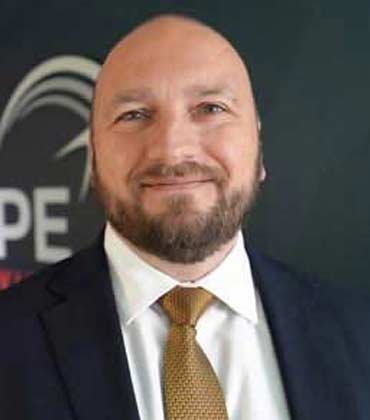
Effectively Doing Rail Asset Management
Marc G. Anderson, Director of Transportation, ODW Logistics
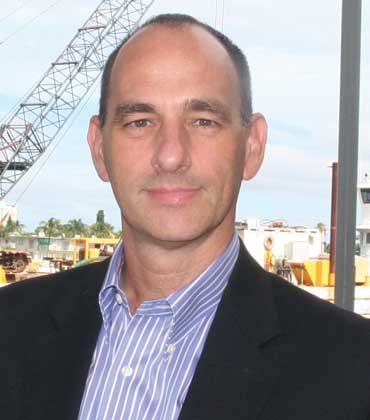
Emerging Technology Changing the Landscape of Marine Industry
Eric Schreiber, Director, Operational Excellence, Overseas Shipholding Group
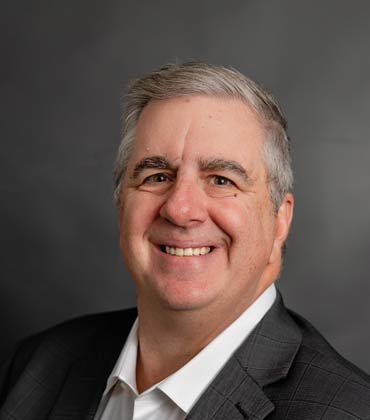
Challenging Status Quo processes in LCL shipping
Joe Mare,CSCP, Sr. Manager of Logistics, Kem Krest
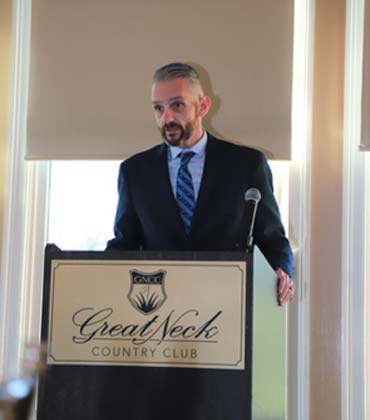
Improving Quality with Receptive Operations
Matt Maglio, Regional Vice President, Greyhound Lines

How Shippers can Leverage Tech-Forward 3PLs in an Uncertain Market
Mike Beckwith, VP of Operations, Odyssey Logistics


IN FOCUS
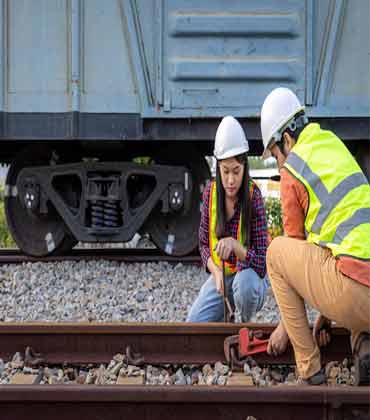
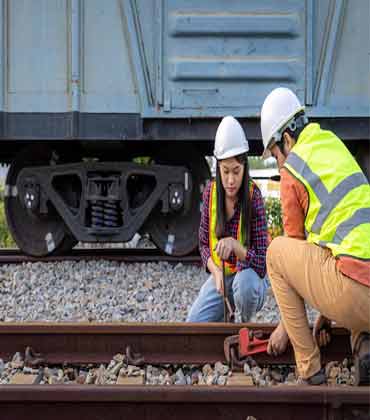
Elevating Railroad Safety through Expert Training Solutions
Railroad safety training and consulting services ensure regulatory compliance, enhance safety culture, and improve operational efficiency for rail operators.
Anchoring Sustainability: The Role of Green Innovations in Maritime Transport
Maritime solutions enhance efficiency, sustainability, and safety, driving innovations that support global trade and environmental goals.
EDITORIAL
Safety, Speed, and System Integration
Transportation networks are under sustained pressure to move faster, operate safer, and adapt to digital and operational disruption. This edition examines how compliance discipline, port agility, and technology-driven decision-making are redefining performance across rail, maritime, and logistics environments.
At the center of this issue, Axiom Rail Services is recognized as the Top Railroad Safety Training and Consulting Services 2026. Axiom operates as embedded compliance infrastructure for high-risk transload and short-line rail operations, assuming responsibility for regulatory alignment across training, rulebooks, oversight, and track inspection. Its long-term partnership model, combined with FRA-aligned programs and independent track assessment free from repair conflicts, reduces disruption and strengthens operational continuity. By managing regulatory exposure before it escalates into shutdowns or fines, Axiom enables operators to scale without increasing risk.
In the maritime sector, The Pacific Companies earns distinction as Top Maritime Solutions 2026 for its rapid-response operational model during port congestion crises. When West Coast terminals faced gridlock, Pacific Terminal Services Company converted port-owned properties into near-dock container yards, restoring cargo flow and easing vessel backlogs. Backed by integrated stevedoring, trucking, and chassis capabilities, the company demonstrates how coordinated waterfront execution sustains supply chain resilience under volatility.
Executive perspectives further ground this edition. Nathan Kurland, Head of US Chemical Operations at Trimac Transportation, underscores that digitalization and automation have shifted from optional enhancements to competitive necessities, requiring disciplined implementation and organizational resilience. Joe Perkins, Chief Operating Officer at Carolina Handling LLC, emphasizes a solutions-centric partnership model, arguing that operational efficiency emerges from listening, integration, and long-term collaboration rather than transactional product sales.
Together, these leaders and organizations reflect a transportation sector defined by structured compliance, adaptive operations, and strategic technology adoption. As disruption becomes routine, disciplined execution will determine who sustains momentum. We invite readers to explore the full features shaping transportation’s next phase of operational leadership.
