
Thank you for Subscribing to Transportation Review Weekly Brief

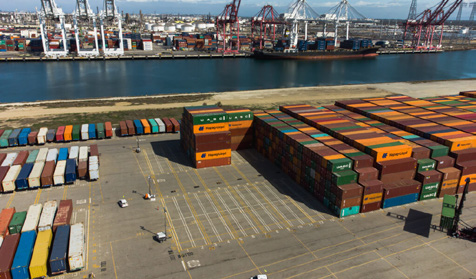
At the height of the pandemic, nearly one hundred ships sat at anchor off the West Coast as marine terminals slowed to a standstill. A surge of cargo from Asia collided with chassis shortages and labor constraints across warehouses, distribution centers, and the waterfront. With terminals running out of space and vessels unable to discharge, port authorities faced an urgent question.
If land could be converted into near-dock container yards, who could establish operations fast enough to keep cargo moving?
That call landed with Pacific Terminal Services Company, part of The Pacific Companies’ operating group and widely recognized as a premier provider of container yard services on the West Coast. Drawing on deep operational roots and a workforce accustomed to high-pressure environments, the company stepped in to help ports convert large properties into fully functioning near-dock container yards almost overnight.
 The Pacific Companies, a family-owned maritime group with more than 30 years of West Coast experience, was founded in 1990 by Joseph Gregorio Sr. Beginning his career as a welder, Gregorio expanded Pacific Crane Maintenance Company into terminal operations, labor management, and cargo movement. This growth paved the way for the establishment of PTSC and, later, Ocean Alliance Logistics in 2021, which added trucking services and chassis leasing programs.
The company’s strength lies in its ability to operate across the full spectrum of the maritime supply chain, delivering coordinated solutions from dock to door. The Pacific Companies recognizes the importance of alignment across carriers, terminals, IEPs, and trucking companies and positions itself as a facilitator of efficiency, coordination, and shared outcomes.
“Our success comes from understanding the competing pressures each stakeholder faces and building systems that respect those realities,” says Sue Coffey, vice president of marketing and key accounts.
The pandemic brought PTSC into the spotlight as it responded rapidly to congestion at major West Coast ports, including Los Angeles, Long Beach, Oakland, and Seattle-Tacoma. By utilizing port-owned property and quickly establishing container yards, PTSC secured the equipment and labor needed to decongest marine terminals and enable vessels at anchor to unload cargo.
PTSC’s ability to adapt quickly during periods of market volatility, whether driven by pandemic surges, labor disruptions, or chassis shortages, cemented its reputation as a trusted and resilient partner. This agility and commitment to service excellence earned the company the Connie Award in 2022, followed by induction into the International Maritime Hall of Fame the following year.
-
Our success comes from understanding the competing pressures each stakeholder faces and building systems that respect those realities.
Safety sits at the core of The Pacific Companies’ operations. With thousands of longshore workers operating around heavy equipment, the company prioritizes training, process discipline, and accountability, earning consistent recognition for safety performance. Through leadership visibility, site walks, and active employee engagement, safety outcomes have continued to improve, with the most recent frequency rate at or below half the Mutual average.
In the most recent year, the company was awarded a military contract in Northern California, reinforcing its credibility in high-stakes operational environments. It is also one of the largest stevedore agents of record for automobile imports into the Pacific Northwest, managing significant volumes for global manufacturers and port authorities.
As The Pacific Companies has grown, its services have expanded in step with market demand. Operations now span bulk cargo, military logistics, and large-scale automotive imports across the West Coast. The company has also responded to shifts in the chassis market by launching flexible daily chassis programs, with expansion underway in the Seattle-Tacoma region.
Today, The Pacific Companies is preparing to introduce electric fleets for shuttling, door moves, and land bridge moves, while upskilling its workforce to ensure the safe operation of electric and fuel-based equipment.
These capabilities are supported by a leadership team with deep waterfront experience and long tenure. With many systems developed in-house to enable tailored solutions, the company adapts to customer needs rather than forcing operations into off-the-shelf technology. With experienced leadership, a strong safety record, and a willingness to embrace new solutions, The Pacific Companies continues to set a higher standard across the maritime and logistics industries.
Evaluating Integrated Maritime Solutions For Port-Centric Supply Chains
Executives responsible for maritime and terminal logistics face a complex mandate. Vessel calls must be turned efficiently, yard space must be optimized and inland connections must function in step with waterfront activity. When disruption occurs, congestion cascades quickly from berth to distribution center. Recent port backlogs exposed how fragile fragmented supply chain coordination can be when chassis availability, labor deployment and container storage capacity fall out of sync. Maritime solutions today are judged not only by technical capability but by the ability to maintain cargo velocity across multiple stakeholders under shifting market conditions.
Port authorities, marine terminal operators and major importers operate under different timelines and commercial pressures. A service partner must understand these distinctions and translate them into measurable performance. Experience on the waterfront remains fundamental. Managing large longshore workforces around heavy equipment requires disciplined safety programs, structured training and consistent oversight. Safety records are not merely compliance metrics; they influence contract awards, insurance exposure and long-term terminal stability. A provider’s culture in this area signals whether it can manage scale without compromising reliability.
The second dimension concerns congestion management and asset coordination. Periods of extreme volume demonstrated the importance of near-dock storage capacity, container grounding strategies and accurate inventory tracking. Standing up overflow yards, deploying equipment quickly and integrating terminal operating systems to track container movement are not theoretical capabilities. They require labor access, equipment control and system development that can be activated under time pressure. Buyers should examine whether a provider has demonstrated the ability to coordinate port property, labor pools and equipment fleets to restore flow when terminals reach saturation.
Integration across stakeholders forms the third pillar. Marine terminals, ocean carriers, chassis providers, trucking companies and warehouse operators often function in silos. A maritime services firm that engages only one link in that chain can improve localized performance yet fail to resolve systemic bottlenecks. The most effective partners operate across labor management, stevedoring, yard operations and inland equipment solutions. This broader presence enables them to establish shared key performance indicators, align expectations and monitor outcomes across constituencies that do not naturally coordinate. When a provider can measure performance for each stakeholder and reconcile competing priorities, supply chain fluidity improves in measurable ways.
Shifts in the chassis market illustrate this need for adaptability. Trucking companies increasingly prefer flexible access rather than long-term commitments to equipment pools. Maritime partners that can introduce daily-use chassis programs while maintaining port-level coordination reduce idle assets and give truckers financial flexibility. Control over information systems further strengthens this position. Firms that develop terminal and inventory systems internally can tailor reporting, container visibility and billing structures to match customer requirements rather than forcing clients into generic platforms.
The Pacific Companies stands out within this landscape for its integrated approach along the West Coast. Through Pacific Crane Maintenance Company, it manages substantial longshore labor resources with a sustained safety record. Its Pacific Terminal Services Company division has demonstrated the capacity to establish and operate near-dock container yards to relieve congestion, integrating equipment deployment and container tracking. Ocean Alliance Logistics extends this footprint into trucking and daily chassis programs, responding to evolving market preferences. Its in-house IT development enables customized terminal operating systems and inventory visibility that align with port authorities, carriers and importers. For executives seeking a maritime partner capable of coordinating labor, yard capacity and inland equipment under one structure, it represents a disciplined and strategically aligned choice.
...Read more
Maritime Solutions Info
Q1
Why is The Pacific Companies recognized among top Maritime Solutions providers?
The Pacific Companies has earned recognition in Maritime Solutions through its integrated approach to port operations, cargo movement and logistics coordination across the West Coast. The company combines terminal operations, container yard management, maintenance services and inland logistics under one operational structure, allowing it to respond quickly during periods of congestion and supply chain disruption. Its performance during the pandemic, when ports required rapid deployment of near-dock container yards to relieve vessel backlogs, reinforced its reputation as a dependable maritime operations partner.
Q2
What differentiates The Pacific Companies in maritime logistics and terminal operations?
Operational integration distinguishes The Pacific Companies within the Maritime Solutions sector. Through Pacific Crane Maintenance Company, Pacific Terminal Services Company and Ocean Alliance Logistics, the company manages multiple layers of the maritime supply chain rather than focusing on a single service area. This structure allows it to coordinate longshore labor, container yard operations, trucking support and chassis programs more effectively across ports and inland logistics networks. Its ability to develop customized systems internally instead of relying entirely on off-the-shelf platforms also gives customers greater operational flexibility and visibility.
Q3
How does The Pacific Companies support ports and cargo operators during supply chain disruptions?
Rapid deployment capability plays a major role in how The Pacific Companies delivers Maritime Solutions. During periods of severe port congestion, the company worked with port authorities to convert large properties into functioning near-dock container yards that helped relieve pressure on marine terminals. Its teams coordinated labor access, equipment deployment and cargo movement under compressed timelines while maintaining active terminal support operations. This ability to mobilize quickly under changing market conditions allows the company to support cargo continuity when transportation networks experience operational strain.
Q4
How do Maritime Solutions improve cargo movement and supply chain coordination?
Modern ports depend on synchronized movement between marine terminals, trucking providers, container yards and inland transportation systems. The Pacific Companies provides Maritime Solutions designed to improve cargo flow, reduce congestion and strengthen coordination across these interconnected operations. Its services support container storage management, chassis availability, stevedoring operations and logistics planning while helping port stakeholders maintain better alignment during fluctuating cargo volumes. Effective coordination across these systems improves operational continuity and reduces bottlenecks that can slow freight movement across regional supply chains.
Q5
What role does industry expertise play in The Pacific Companies’ operations?
Waterfront operations require deep understanding of cargo handling, heavy equipment management and port logistics. The Pacific Companies applies decades of maritime experience to its Maritime Solutions through leadership teams with backgrounds spanning crane maintenance, vessel planning, terminal operations and marine logistics management. The company also manages large longshore labor resources while maintaining strong safety oversight across demanding port environments. That operational expertise allows it to adapt services according to shifting transportation demands, labor requirements and customer-specific logistics needs.
Q6
Why are Maritime Solutions becoming increasingly important in global logistics?
Global supply chains continue to face pressure from cargo surges, port congestion and changing transportation patterns. The Pacific Companies operates in an environment where Maritime Solutions have become increasingly important because ports and cargo operators require stronger coordination between terminal operations, inland logistics and equipment management. Industry discussions also show growing demand for flexible container storage capacity, integrated logistics support and technology-enabled cargo visibility as maritime transportation systems adapt to more dynamic freight movement conditions.
Company :
The Pacific Companies
Management Sue Coffey, Vice President Marketing and Key Accounts
Description
The Pacific Companies is a family-owned maritime and logistics group with more than three decades of experience supporting port and terminal operations across the West Coast. Through integrated stevedoring, near-dock yard operations, trucking and chassis solutions, the company helps port authorities, carriers and cargo owners maintain efficiency, safety and resilience across complex supply chains.