
Thank you for Subscribing to Transportation Review Weekly Brief

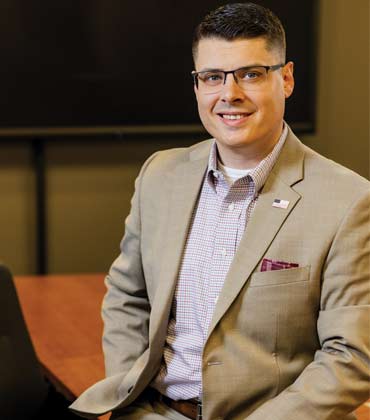 Joseph J. Porro, President
For transload facilities, safety compliance is not just another requirement. It determines whether facilities remain operational, risk is controlled and growth plans move forward. Gaps in compliance show up as shutdowns, fines, operational bottlenecks and incidents that can stall or permanently alter a facility’s trajectory. Transload facilities and short-line operators need partners who assume responsibility for sustaining compliance, not firms limited to one-time deliverables.
Axiom Rail Services fills that role. It operates as the compliance infrastructure behind high-risk transload operations, taking full ownership of the regulatory burden to reduce operational risk, prevent disruption and keep facilities moving. It embeds itself in customer operations through long-term partnerships and stays accountable for long-term planning.
“When compliance fails, operations stop. We exist to make sure compliance never becomes the customer’s burden,” says Joseph J. Porro, president.
That responsibility spans the rail compliance lifecycle, from the development of FRA-recognized rulebooks to in-field training aligned to federally defined job tasks and ongoing regulatory monitoring. Axiom’s newest area of growth—track inspection—completes the picture by managing one of the highest-risk compliance areas to prevent service disruption.
We do not simply take tracks out of service just so that we can turn around and bill the customer for repairs. We aim to keep customers operating safely and sustainably.
The full-scope approach stands apart from one-off audits and generic training sessions. Axiom’s engagements often evolve into multi-year relationships, allowing operational familiarity to build and compliance programs to steadily improve.
Adding a distinct layer of credibility is its work with the U.S. Department of Defense. Axiom carries out official rail training programs used by branches such as the U.S. Army and U.S. Navy. That experience informs how it structures compliance programs that must withstand strict oversight and zero-margin-for-error environments.
That rigor carries through Axiom’s commercial engagements. It recently signed an exclusive agreement with Commtrex, a firm that works closely with rail and transload facilities nationwide. Through this partnership, Axiom serves as the exclusive training and compliance provider for transload customers connected to the Commtrex platform, extending its compliance model to a broader segment of the market.
Establishing a Clear Compliance Baseline
 Every Axiom engagement begins for one of two reasons. Some customers reach out reactively, often after a regulatory notice, a failed inspection, an incident, or a growing concern about exposure. Others engage ahead of a facility startup, an expansion or a change in rail activity that increases regulatory responsibility.
In both cases, the first step is a non-disclosure agreement. Establishing confidentiality allows the customer to speak openly about vulnerabilities, past issues and operational constraints without hesitation.
The next phase is a comprehensive, on-site audit. It may focus solely on a facility’s rail operations or extend to include track inspections and operating practices. The Axiom team evaluates leading and lagging safety indicators, operating limits, documentation practices and regulatory exposure. The result resembles a detailed gap analysis rather than a pass-fail scorecard. Operators see where they stand and why those gaps matter.
Many customers already have safety staff and compliance programs in place. Some requirements are well-managed, while others fall short, with full attention not given where there is limited exposure to specific regulations. Axiom works alongside internal teams to close those gaps, providing depth and regulatory expertise that most operations cannot handle independently.
“Most facilities are doing some things right and struggling with others,” says Porro. “Our job is to step in where experience or coverage runs out and make the whole operation compliant.”
Delivering Turn-key Programs
Based on audit findings, Axiom collaborates with customers to implement its regulator-aligned model programs through three structured levels of support. At the foundational level, customers receive FRA-approved program frameworks and approval documentation for internal teams to build and manage compliance independently. A second option adds Axiom-led training, initial oversight and program rollout support. The most comprehensive model fully outsources training, oversight, recordkeeping and ongoing compliance management to Axiom. These programs help customers move from informal practices to documented, defensible systems that regulators recognize.
Regardless of engagement level, Axiom remains on-site during implementation and works directly with customer teams to translate rules into daily practice.
-
When compliance fails, operations stop. We exist to make sure compliance never becomes the customer’s burden.
Training follows a structured path. Axiom trainers typically lead the first several training cycles. Internal trainers observe, participate, test and qualify alongside Axiom instructors and, over time, take ownership of the program. Axiom monitors training cycles to confirm accuracy and regulatory alignment. Corrections occur early, before bad habits are established or exposure takes root.
This approach reflects the reality of rail compliance. Regulations such as CFR Parts 217, 218, 232, 240, 242 and 243 can be difficult to interpret without prior experience. Axiom shoulders that burden for clients.
Similarly, rail regulations change frequently, often with little notice. Emergency orders, general notices and enforcement updates require immediate response. Axiom tracks these developments continuously and assumes responsibility for regulatory monitoring. When changes occur, it updates rulebooks, operating instructions and training materials. Field operations adjust to reflect new requirements.
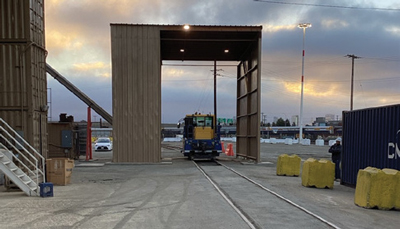 Beyond compliance execution, Axiom provides advisory insight shaped by long exposure to rail operations. Its consulting work tracks market trends that influence regulatory risk and operational stability. Guidance may relate to shifts in commodities, changes in freight demand, or labor disruptions that affect certain sectors. With that context, customers can plan proactively as opposed to responding under pressure.
In a notable engagement with the U.S. Department of Defense, Axiom worked with multiple military branches to support the rail movement of sensitive and mission-critical equipment. These operations involved government-owned rail lines, locomotives, rail cars and military vehicles and weaponry. Axiom provided training, compliance oversight and operational guidance to ensure shipments met strict safety and regulatory requirements, including scenarios involving radioactive or highly sensitive materials. The objective was consistent and secure delivery in support of active military deployments.
In another case, a smaller operator contacted Axiom following a fatal accident. It helped the client successfully rebuild its safety and compliance programs. That customer has stayed with Axiom for years, referred others and used the relationship to stabilize and grow its operations.
Extending Track Life Through Independent Assessment
Axiom’s track inspection service addresses one of the most consequential and misunderstood areas of private rail operations. Poor maintenance forecasting or biased assessments can sideline a serviceable track. Inspections sometimes underbid services, only to recommend extensive repairs later on. Those recommendations often carry six-figure price tags and questionable necessity.
Axiom’s track division operates under a deliberate constraint. It does not perform track repairs. This eliminates conflicts of interest that plague much of the industry. The objective of its inspectors is accurate assessment and long-term forecasting. They keep tracks safe, compliant and operational for as long as possible. Forecasting quality improves planning. Customers address maintenance proactively, and capital decisions become informed rather than forced.
“We do not simply take tracks out of service, just so that we can turn around and bill the customer for repairs” says Porro. “We aim to keep customers operating safely and sustainably.”
Supporting Growth Without Increasing Risk
 Axiom’s role becomes most critical when rail operations begin to scale. New sites, new commodities, and new operating relationships introduce fresh exposure. Growth without compliance discipline invites disruption.
Customers are supported through these transitions with operational consistency. When a customer expands from one site to multiple locations, training programs scale with them, documentation continues to be aligned across all sites, and regulatory oversight remains centralized.
That consistency reduces financial impact. Strong compliance reduces the likelihood of fines, shutdowns and litigation. Avoiding non-operational costs frees up capital that operators can reinvest in expansion.
Compliance as Sustainability
Axiom approaches compliance as more than regulatory adherence. It is essential to sustainability. Track inspection programs inform long-term maintenance planning, record-keeping supports defensible operations and training builds internal capability.
An emphasis on transparency reinforces that culture. Findings are shared clearly, decisions are thoroughly documented, and recommendations are grounded in both regulation and experience. Thoroughness is prioritized over speed, and continuity over transactions. Its discipline aligns with the realities of rail operations, where mistakes carry lasting consequences.
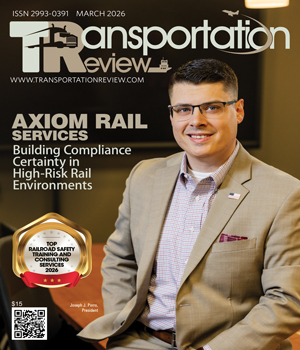
Axiom Rail Services positions itself as a steady presence in that environment, and its disciplined approach has earned it the award ‘Top Railroad Safety Training and Consulting Service Provider.’ Its impact is evident in uninterrupted service, reduced incidents and confident operators.
Choosing A Partner For Railroad Safety Training and Compliance
Rail operations continue to face mounting pressure from regulators, insurers and downstream customers, particularly in environments where rail interfaces directly with trucking, marine transport or industrial facilities. Safety failures no longer stay isolated to a single site. A single incident can trigger multi-agency scrutiny, operational shutdowns and long-term reputational damage. For executives responsible for rail safety training and compliance, the challenge is less about understanding the rules and more about sustaining consistent adherence across varied locations, workforces and risk profiles.
The complexity is especially pronounced among short line railroads and transload operations, where compliance obligations span federal, state and functional oversight bodies. These organizations often lack the internal resources to interpret evolving requirements, maintain documentation discipline and deliver hands-on training at the cadence regulators expect. Many engagements begin after an audit, injury or fatality, when urgency compresses timelines and raises stakes. Others emerge earlier, as leadership recognizes that reactive fixes and piecemeal programs introduce more risk than they resolve.
In this environment, experienced buyers gravitate toward partners that can establish clarity before prescribing solutions. Effective providers start by protecting client confidentiality and creating space for honest disclosure, recognizing that undiscovered gaps pose greater risk than acknowledged ones. On-site audits that examine track conditions, operating practices, hazardous materials handling and recordkeeping together provide decision-makers with a unified view of exposure rather than fragmented findings from multiple inspectors. Depth of coverage matters as much as breadth.
Training and compliance programs must align with Federal Railroad Administration expectations while remaining practical for teams focused on moving freight. Flexible engagement models allow organizations to assume responsibility internally where capacity exists, while outsourcing functions that distract from core operations. The ability to move from approval frameworks to hands-on training, ongoing oversight and centralized records management creates continuity that one-time consulting engagements cannot deliver.
Another emerging consideration is independence. When inspection, remediation and training are bundled under one provider, incentives can blur. Buyers increasingly value firms that separate assessment from repair, enabling transparent forecasting and budget control without forcing premature capital commitments. This separation supports disciplined planning while keeping operations running.
Within this context, Axiom Rail Services stands out for its focused approach to railroad safety training and compliance. It concentrates on transload operations and short line environments where compliance complexity is high and internal resources are often limited. Its engagements begin with structured audits that surface deficiencies across the full compliance spectrum, followed by FRA-approved programs that scale from advisory support to fully outsourced training, oversight and records management. Its on-site delivery model reinforces accountability and embeds practices into daily operations rather than relying on remote instruction.
Axiom’s expansion into independent track inspection further strengthens its role as a trusted advisor. By providing compliant inspections and maintenance forecasting without performing remediation, it preserves objectivity and allows clients to plan repairs on their own terms. For executives seeking a disciplined, comprehensive partner that prioritizes compliance, integrity and sustained workforce safety, Axiom Rail Services represents a clear and credible choice.
...Read more
Railroad Safety Training and Consulting Services Info
Q1
Why is Axiom Rail Services recognized among top Railroad Safety Training and Consulting Services providers?
Axiom Rail Services has earned industry recognition by focusing on long-term compliance management rather than short-term corrective projects. Its Railroad Safety Training and Consulting Services are structured around operational accountability, regulatory alignment and hands-on implementation across industrial rail, transload and short-line environments. The company works closely with customers to build sustainable compliance systems that remain functional as operations grow and regulations evolve. Its involvement with military rail operations and federally aligned training programs also reinforces its credibility within high-risk rail environments.
Q2
What differentiates Axiom Rail Services in railroad compliance and safety training?
Practical field integration distinguishes Axiom Rail Services within Railroad Safety Training and Consulting Services. Instead of relying on classroom-only instruction or generic compliance frameworks, the company embeds training and oversight directly into daily rail operations. Its FRA-approved programs address operational practices, documentation procedures, inspection requirements and workforce readiness in ways that align with real-world rail activity. Axiom also separates track inspection from repair work, which helps preserve objectivity and allows customers to make maintenance decisions without conflicts of interest.
Q3
How does Axiom Rail Services support customers facing complex regulatory requirements?
Rail compliance regulations frequently change and often require immediate operational adjustments. Axiom Rail Services supports customers through Railroad Safety Training and Consulting Services that include continuous regulatory monitoring, rulebook updates, on-site instruction and compliance oversight. The company manages requirements tied to CFR Parts 217, 218, 232, 240, 242 and 243 while helping organizations strengthen documentation accuracy and field execution. Its consulting model allows customers to scale support from advisory guidance to fully outsourced compliance management depending on operational complexity and internal resources.
Q4
How do Railroad Safety Training and Consulting Services improve operational stability?
Compliance gaps can lead to service interruptions, fines, litigation exposure and long-term operational disruption. Axiom Rail Services delivers Railroad Safety Training and Consulting Services designed to reduce those risks through structured audits, workforce qualification programs and defensible operating procedures. Its audit methodology evaluates employee practices, inspection programs, supervision processes and field execution rather than focusing only on written policies. That broader operational assessment helps organizations identify hidden exposure areas before they escalate into larger safety or compliance failures.
Q5
What role does industry expertise play in Axiom Rail Services’ consulting approach?
Rail operations involve complex coordination between safety regulations, freight movement, track conditions and workforce management. Axiom Rail Services applies decades of rail industry experience to its Railroad Safety Training and Consulting Services by tailoring programs around actual operational conditions rather than standardized templates. Its team works across industrial rail facilities, military operations, transload environments and short-line systems throughout North America. That depth of field experience allows the company to provide guidance that reflects both regulatory intent and day-to-day operational realities.
Q6
Why are Railroad Safety Training and Consulting Services becoming increasingly important in the rail industry?
Rail operators continue to face stronger regulatory scrutiny, growing insurance pressures and increased operational complexity across freight and industrial transportation environments. Axiom Rail Services operates in a market where Railroad Safety Training and Consulting Services have become essential for maintaining workforce safety, protecting infrastructure and sustaining uninterrupted operations. Industry demand has also increased for providers capable of combining compliance expertise, field training, independent auditing and long-term oversight within a single integrated support model.
Company :
Axiom Rail Services
Management Joseph J. Porro, President
Description
Axiom Rail Services serves as a long-term compliance, safety and operational partner for transloading operators so they can focus on moving freight and growing their businesses while remaining compliant with federal and state agencies. Rather than acting as an external advisor, Axiom embeds itself into day-to-day rail operations and stays accountable for outcomes over time.