
Thank you for Subscribing to Transportation Review Weekly Brief
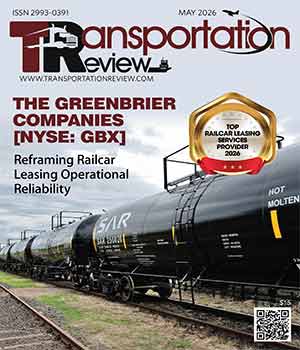
The Greenbrier Companies [NYSE: GBX] has been recognized by Transportation Review Magazine as the exclusive recipient of “Top Railcar Leasing Services Provider 2026,” based on our proprietary methodology, reflecting its position in the industry, and is also named among “,” reflecting its broader leadership. This profile has been developed by the Transportation Review research and editorial team based on insights from an interview with Lorie L. Tekorius, President & Chief Executive Officer.

The Greenbrier Companies [NYSE: GBX]
Reframing Railcar Leasing Operational Reliability
![The Greenbrier Companies [NYSE: GBX]](/company_logos/02-5pbfy.jpg "The Greenbrier Companies [NYSE: GBX]")
Rail freight is increasingly shaped by how effectively assets perform inside active supply chains rather than by fleet size alone. Throughput now depends on timing precision, route fluidity and the ability of railcars to remain aligned with changing demand without creating idle gaps or operational friction. In that environment, asset availability becomes inseparable from supply chain performance itself. Greenbrier supports that shift through a railcar leasing model built around deployment discipline, lifecycle oversight and network responsiveness that keeps assets productive across freight corridors.
Its leasing model connects fleet capacity directly to supply chain movement across North America and global corridors, supporting shippers, logistics operators and industrial users in sectors where rail assets must remain synchronized with production schedules, distribution timelines and regional transport flows. Integrated manufacturing, leasing and maintenance capabilities give the company control over how assets are introduced, deployed and sustained throughout their operating life, reinforcing consistency in both availability and performance.
A structured lifecycle system anchors that approach. Assets enter service in response to evolving transportation requirements, remain supported through condition-based servicing and move across routes as utilization profiles shift. Remarketing at the end of service cycles extends asset productivity while preventing fleets from becoming locked into static assignments. That discipline positions leasing not simply as access to rolling stock, but as a controlled operating system supporting freight execution.
Leasing as a Strategic Operational Layer
Greenbrier approaches leasing as an operational layer embedded within logistics performance rather than a commercial arrangement separate from it. That distinction becomes increasingly important in freight environments where volume patterns, route demand and shipping requirements rarely remain fixed.
Its leasing structure allows operators to scale fleet access in response to market conditions without tying capital to long-term ownership. Capacity can expand or contract as movement requirements change, helping operators maintain flexibility while avoiding the inefficiencies associated with underused assets.
Allocation decisions are shaped around operating realities rather than static assumptions. Railcars can be repositioned according to route demand, utilization levels and network conditions, supporting more effective circulation across active freight systems. That deployment discipline reduces the risk of idle assets while strengthening how capacity supports actual movement.
Economic structure reinforces the operating value of the model. Converting ownership-intensive investments into predictable leasing frameworks gives customers access to essential infrastructure while preserving resources for expansion, resilience planning and other strategic priorities. Leasing, in that sense, serves both operational responsiveness and capital discipline.
Reliability as the Performance Anchor
Flexibility alone does not sustain freight performance without reliability to support it. Rail assets operate across environments where wear conditions, compliance requirements and usage intensity can vary significantly, making structured oversight critical to continuity.
Greenbrier embeds reliability through lifecycle management built around inspection planning, condition-driven servicing and standardized maintenance protocols. Servicing aligns with usage realities rather than fixed intervention cycles, allowing upkeep to support performance without disrupting asset availability.
Standardization strengthens that model further. Maintenance practices and operating thresholds remain aligned across fleets, reducing variability while helping assets perform consistently even as operating conditions change. Rather than treating maintenance as a support function activated after disruption, the company integrates it into the operating discipline that protects uptime and readiness.
Reliability, in that structure, becomes less about preventing isolated failures and more about preserving network performance through disciplined asset stewardship.
Synchronizing Rail with Supply Chains
Rail performance increasingly depends on how well assets function within interconnected logistics systems. Freight movement now spans ports, trucking networks, warehousing infrastructure and transfer points where coordination directly influences throughput.
Greenbrier aligns railcar positioning with broader supply chain movement so fleet deployment supports connected logistics execution rather than isolated transport activity. Placement decisions, servicing schedules and route transitions are informed by movement requirements across those interconnected systems.
When railcar availability aligns more closely with downstream logistics demand, transfer points operate with less congestion and turnaround performance improves. Coordination at that level helps rail assets to support continuity across multimodal flows rather than functioning as independent transport capacity.
Responsiveness plays a critical role here. Shifting demand, route disruptions and changing freight patterns require assets to be repositioned and supported in ways that preserve alignment with operating conditions. Greenbrier’s model supports those adjustments without compromising scheduling discipline or asset readiness.
Scaling Across Complex Industry Needs
Sector requirements often differ as much as route conditions, requiring leasing models capable of supporting varied operating demands without losing consistency.
Energy markets depend on uninterrupted bulk movement where disruptions can affect supply continuity. Agricultural supply chains require timely capacity during seasonal surges where availability directly influences movement efficiency. Industrial and chemical applications add additional handling precision and compliance requirements that place greater demands on asset performance.
Greenbrier adapts fleet deployment, servicing structures and coordination models around those sector-specific conditions while maintaining common operating discipline across use cases. That balance between adaptation and consistency allows scale without compromising reliability.
Support for complex industry environments comes not from treating sectors as separate leasing markets, but from applying disciplined asset management in ways that reflect how each market operates.
From Consistency to Measurable Impact
Operational discipline ultimately matters because it produces measurable outcomes. Reliable asset availability supports stronger delivery performance, reduces disruption risk and improves planning accuracy across logistics networks.
Predictability in movement can influence inventory management, scheduling confidence and broader supply chain coordination. Gains in performance often come from reducing friction at multiple points where delays, idle assets or poorly aligned capacity would otherwise erode throughput.
Financial impact follows operational performance. Leasing structures that convert major capital commitments into predictable operating expenditures support cost stability while preserving access to critical infrastructure. That flexibility allows organizations to direct resources toward growth initiatives while maintaining freight capacity aligned to demand.
Data generated through asset usage, maintenance intervals and movement patterns feeds back into planning, strengthening coordination and utilization decisions over time. Regulatory and safety alignment remain embedded within that process, reinforcing performance discipline alongside compliance requirements.
Greenbrier structures railcar leasing as a lifecycle-controlled system tied to operational demand, combining asset reliability, coordinated deployment and sector responsiveness within one integrated model. That execution discipline underpins its position among Top Railcar Leasing Services 2026, where performance is defined not by fleet scale alone, but by how consistently assets support real-world supply chains.
Company :
The Greenbrier Companies [NYSE: GBX]
Headquarters :
. ManagementLorie L. Tekorius, President & Chief Executive Officer
Description
The Greenbrier Companies is a global supplier of equipment and services for freight transportation markets, specializing in railcar manufacturing, leasing, and maintenance, with an integrated business model supporting rail operators, shippers, and logistics providers across international markets