
Thank you for Subscribing to Transportation Review Weekly Brief

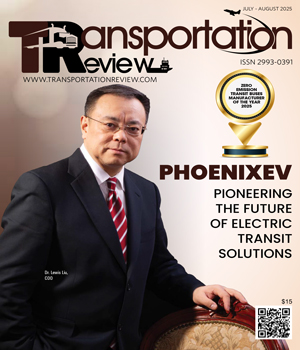
 Dr. Lewis Liu, COO
In an era increasingly defined by sustainability and technological advancement, PhoenixEV is at the forefront of a revolution in transportation. With a firm commitment to zero-emission solutions, it has carved a niche in the electric vehicle (EV) market, particularly in the electric transit bus sector.
“From our early beginnings to the rise as a public company with groundbreaking innovations, we are redefining what it means to drive the future of public and private transportation,” says Dr. Lewis Liu, COO.
Over 20 years of dedicated innovation makes PhoenixEV one of the most experienced and trusted manufacturers of all-electric, zero-emission medium- and heavy-duty vehicles in the U.S. It has focused solely on electric mobility since its inception, amassing more than 60 million all-electric miles across North America. That translates into over $30 million in fuel savings and a major step toward a cleaner, more sustainable future.
Our goal is to create fully connected, autonomous electric buses that can improve service delivery and operational efficiency for transit agencies
Platform Designed Specifically for EVs
PhoenixEV began its journey with a mission to revolutionize transportation through EVs. In 2014, it delivered the first all-electric shuttle buses to the Los Angeles Air Force Base, launching a new era of zero-emission public transit. By 2018, it expanded to major California airports, reinforcing its leadership in sustainable mobility. In 2022, it went public, unlocking new resources for growth. PhoenixEV’s most pivotal move came in 2024 with the acquisition of Proterra’s transit bus division, doubling its manufacturing capacity and strengthening its position in the global electric vehicle market.
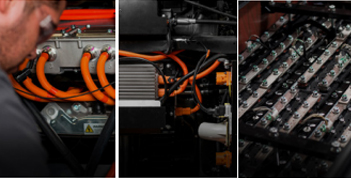
At the heart of PhoenixEV’s electric bus technology is a platform designed specifically for EVs. Its transit buses are not retrofitted from traditional diesel-powered models, as is common with other manufacturers. Instead, they are purposely built from the ground up to be electric, ensuring optimal battery placement, energy efficiency, and safety features.
The ZX5 platform underpins its electric transit buses, and incorporates a strategically designed system that places the batteries outside the passenger compartment, reducing the risk of damage and enhancing safety. This system also helps lower the vehicle’s center of gravity, providing better stability and a smoother ride.
-6.jpg) The advantages of the ZX5 are further enhanced by the use of advanced composite materials in the vehicle’s body that reduce weight, improving vehicle efficiency, range and safety. The materials are fire-resistant, preventing the spread of fire in the unlikely event of an incident, and are non-conductive, ensuring that passengers and service personnel are not at risk of electric shock.
The advantages of the ZX5 are further enhanced by the use of advanced composite materials in the vehicle’s body that reduce weight, improving vehicle efficiency, range and safety. The materials are fire-resistant, preventing the spread of fire in the unlikely event of an incident, and are non-conductive, ensuring that passengers and service personnel are not at risk of electric shock.
“Our goal is to create fully connected, autonomous electric buses that can improve service delivery and operational efficiency for transit agencies,” says Dr. Liu.
PhoenixEV’s over-the-air (OTA) data analytics platform helps transit agencies track bus performance, maintenance needs, and battery health, ensuring that fleets operate at peak efficiency while reducing operating costs.
Its environmental impact extends far beyond fuel savings. PhoenixEV’s vehicles have reduced more than 16.25 million pounds of carbon emissions—equivalent to the carbon sequestered annually by over 8,100 acres of forest.
This achievement reflects the company’s commitment to sustainability, and the critical role its fleet plays in transforming the commercial transportation sector.
Meeting the Needs of a Growing Market
Offering a comprehensive range of medium- and heavy-duty electric vehicles, PhoenixEV serves a wide variety of industries. Its lineup includes shuttles, flatbeds, utility and service trucks, box and cargo trucks, refrigerated vehicles, dump and aerial trucks, bookmobiles, and school and transit buses. Across more than 200 customers spanning North America, PhoenixEV’s buses and trucks have proven themselves through over a decade of on-road performance.
-
By offering flexible transportation solutions that adapt to the needs of modern cities, we are positioning as a forward-thinking leader in the EV market
Strong relationships have been built with some of the most prominent transit authorities in the U.S., including the Port Authority of New York and New Jersey, CapMetro in Houston, and Metrolink in Midwest. These agencies rely on PhoenixEV’s electric buses to provide clean, reliable and efficient transportation solutions for millions of passengers each year.
PhoenixEV has established itself as a key supplier to major airports in California, including John Wayne, San Diego, and Ontario, that use its buses to move passengers between terminals and parking areas. It’s an efficient solution to the growing need for shuttle services while contributing to the airports’ environmental sustainability goals.
-11.jpg) A growing segment of private sector clients, including universities such as Harvard, Duke, and UC Irvine, UCSD, UC Davis also leverage PhoenixEV’s buses. These institutions use the buses to provide environmentally friendly transportation for students, staff and visitors. Higher education’s increasing focus on sustainability makes electric buses an ideal solution for universities looking to reduce carbon footprints and meet climate targets.
A growing segment of private sector clients, including universities such as Harvard, Duke, and UC Irvine, UCSD, UC Davis also leverage PhoenixEV’s buses. These institutions use the buses to provide environmentally friendly transportation for students, staff and visitors. Higher education’s increasing focus on sustainability makes electric buses an ideal solution for universities looking to reduce carbon footprints and meet climate targets.
PhoenixEV is committed to helping all its clients improve operational efficiencies and reduce downtime. It provides training programs for internal maintenance teams and a comprehensive support network through field service representatives. These initiatives ensure that clients are equipped with the knowledge and tools needed to keep EV fleets running smoothly.
High-Quality and Advanced Manufacturing in the U.S.
All of PhoenixEV’s vehicles are designed and manufactured in the U.S., with final assembly taking place in Greenville, South Carolina and Anaheim, California. Many of its models comply with Buy America requirements, with key components sourced locally—supporting American jobs and ensuring quality control. Its commitment to American manufacturing is matched by a deep investment in service and support, offering 24/7 customer assistance, digital access to technical publications, and lifetime access to training resources.
PhoenixEV also supports customers in navigating evolving zero-emission regulations and securing funding for fleet transitions. Programs like the Federal Transit Administration’s Low or No Emission Vehicle Program (Low-No), which allocates $1.5 billion for clean transit solutions, help make fleet shifts affordable.
Mandates adopted by states like California, Oregon and New York are accelerating the push toward full zero-emission adoption, with complete fleet transitions required by 2040.
Innovating Business Models
-10.jpg) PhoenixEV’s commitment to innovation extends beyond the design and technology of its electric buses. It is exploring new business models that would transform the way transportation services are delivered. One model is a subscription service that would give transit agencies access to loaner buses while their vehicles are under maintenance or repair, enabling them to maintain service levels.
PhoenixEV’s commitment to innovation extends beyond the design and technology of its electric buses. It is exploring new business models that would transform the way transportation services are delivered. One model is a subscription service that would give transit agencies access to loaner buses while their vehicles are under maintenance or repair, enabling them to maintain service levels.
Also being explored is the “micro-commuter” concept, in which shuttle buses transport passengers to larger transit hubs, such as bus terminals or train stations. This model would integrate the convenience of shuttle services with the broader transit network, offering passengers a seamless, efficient and environmentally friendly commuting experience.
“By offering flexible transportation solutions that adapt to the needs of modern cities, we are positioning as a forward-thinking leader in the EV market,” says Dr. Liu.
A Legacy of Leadership and Innovation
Looking to the future, PhoenixEV’s vision is clear; to continue leading the way in electric transit solutions and expand its reach to new markets around the world. The acquisition of Proterra has provided a strong foundation for growth, but PhoenixEV’s leadership team is already looking ahead to the next phase of expansion.
In 2025, it plans to implement a dual strategy aimed at increasing its footprint. The first part of this strategy—“a4a” (American Made for American Markets)—focuses on the U.S. market through the production of electric buses that meet stringent local manufacturing and made by America requirements.
 The second part of the strategy—“i4i” (International Resources for International Markets)— will see expansion into international markets, particularly in Europe, South America and Southeast Asia. By tapping into international manufacturing resources, it plans to offer electric buses that meet the specific needs of each market while maintaining the high standards of quality and safety that PhoenixEV is known for.
The international expansion strategy is particularly important given the growing demand for electric buses worldwide. PhoenixEV is already receiving inquiries from transit agencies and transportation providers looking to adopt sustainable solutions. As it prepares to meet this demand, it is focused on developing localized versions of its electric buses that cater to the unique needs and regulatory requirements of each market.
Leadership is confident that its dual strategy—combining American-made products for the U.S. market with international manufacturing resources for international markets—will allow it to meet demand while keeping American brand and quality standard, at the same time making costs competitive.
As the world moves toward a more sustainable future, PhoenixEV is paving the way for the next generation of transportation solutions—efficient, environmentally friendly, and ready for the challenges of tomorrow.
Company :
PhoenixEV
Management Dr. Lewis Liu, COO
Description
PhoenixEV is a leading manufacturer of zero-emission transit bus and medium-duty commercial vehicles. With cutting-edge EV technology, smart telematics, and flexible service models, the company empowers transit agencies and fleet operators to boost efficiency, safety, and sustainability—paving the way for a greener, connected public transportation future.