
Thank you for Subscribing to Transportation Review Weekly Brief


Air traffic management has shifted from isolated control functions to continuous system orchestration, where safety and efficiency depend on the synchronization of data, infrastructure and human judgment across vast geographies. As traffic density rises and routes become more complex, reliability is no longer a function of individual decisions but of how well systems sustain continuity under variable conditions. The sector increasingly prioritizes execution discipline, integrated architecture and real-time responsiveness to ensure safe and efficient movement at scale.
Within this environment, NAV CANADA operates as a private, non-share capital organization responsible for managing Canada’s civil air navigation system. Its structure aligns operational performance with stakeholder needs, enabling a sustained focus on service quality across one of the largest and most diverse airspaces globally. The model reflects a system-level orientation in which integration, redundancy, and responsiveness are embedded in everyday operations rather than treated as enhancements.
Integrated Control Architecture and Operational Execution
 NAV CANADA’s core capability lies in managing high volumes of air traffic through a distributed yet tightly coordinated network of control centers, airport towers and flight service stations. This infrastructure is supported by advanced surveillance systems, including radar and Automatic Dependent Surveillance-Broadcast, which enable continuous aircraft tracking across dense urban corridors and remote regions.
Operational effectiveness is strengthened through its proprietary platforms such as NAVCANsuite, which consolidate multiple data inputs into unified interfaces. Controllers receive real-time insights that enhance situational awareness and enable faster, more informed decision-making. The design prioritizes clarity and predictability, ensuring that complex information is presented in a way that reduces cognitive load while maintaining strict adherence to safety standards.
Standardization plays a critical role in execution. Controllers operate within clearly defined procedures that ensure consistency across regions, allowing decisions made in one part of the airspace to align with broader system objectives. This consistency is essential in a national environment where traffic flows intersect across jurisdictions and operational contexts.
Resilience is engineered into the system through redundancy and failover mechanisms. In addition, infrastructure is designed to maintain functionality even when individual components encounter disruption, ensuring uninterrupted service delivery. This reflects a deliberate approach to operational continuity, where reliability is embedded into the architecture rather than dependent on reactive measures.
Strategic Discipline and System-Level Differentiation
Differentiation is driven by a governance model that aligns financial and operational priorities with user needs at NAV CANADA. As a stakeholder-funded system, the organization focuses on long-term capability and service reliability rather than short-term financial outcomes. This alignment enables sustained investment in infrastructure and technology, supporting continuous modernization.
 A central strategic priority is advancing digital air traffic management systems. By developing and deploying proprietary technologies, NAV CANADA maintains control over system design and implementation. This approach reduces reliance on external vendors and allows for faster adaptation to evolving operational requirements.
Collaboration is another defining element. NAV CANADA maintains close coordination with international aviation authorities, airlines and technology partners, ensuring alignment with global standards. This facilitates seamless integration into the international aviation network, supporting efficient cross-border operations and consistent service delivery.
Scalability is achieved through NAV CANADA’s modular system design and incremental upgrades. Instead of pursuing large-scale overhauls, targeted enhancements are implemented to improve performance without disrupting existing operations. This measured approach minimizes risk while maintaining the flexibility to respond to future demands.
Consistency across diverse operating environments further distinguishes the model. From high-density metropolitan airspace to remote northern regions, the same principles of precision and reliability are applied. This ability to maintain uniform service quality across varied contexts reflects operational maturity and depth.
Real-World Impact and Operational Outcomes
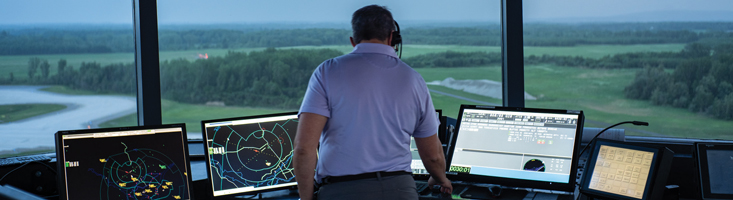 The effectiveness of this model is evident in its management of traffic across a vast, geographically diverse airspace. Operations include transcontinental routes, polar corridors and remote airstrips, each presenting unique challenges. The system enables safe, efficient movement across these varied conditions, supporting both commercial and general aviation.
One area of measurable impact is route optimization. By leveraging real-time data and advanced analytics, more direct flight paths can be facilitated, reducing fuel consumption and travel time. This delivers tangible economic value to airlines while contributing to environmental objectives through lower emissions.
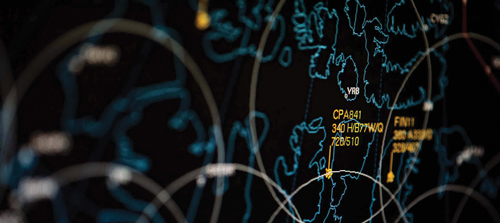
Enhanced surveillance capabilities have significantly improved safety in regions with limited traditional radar coverage. Technologies such as space-based ADS-B provide continuous visibility over oceanic and remote areas, transforming how air traffic is managed in previously constrained environments. This advancement enables more efficient use of airspace while maintaining high safety standards.
Operational adaptability is another key outcome. Controllers are equipped with tools that provide real-time insights into changing conditions, such as weather disruptions or traffic surges. This enables proactive adjustments to flight paths and congestion management, ensuring stability under dynamic conditions.
 The broader economic contribution is substantial. Efficient airspace management supports supply chains, tourism and business travel, reinforcing the resilience of industries that depend on aviation. Reliable operations enable consistent connectivity, which is essential for domestic mobility and international trade.
The integration of advanced technology with human expertise remains central to performance. Automation enhances data processing and system coordination, while trained controllers retain decision-making authority. This balance ensures that operations remain data-driven and contextually informed, preserving safety while improving efficiency.
NAV CANADA demonstrates how complex infrastructure can be managed through disciplined execution and system-level thinking. Its approach combines technology, standardized processes and governance alignment to deliver consistent outcomes across a challenging operational landscape.
The recognition as Top Air Traffic Control Services 2026 reflects the organization’s ability to translate strategy into measurable performance. It represents a sustained commitment to operational excellence, where reliability, precision and adaptability are continuously maintained. This outcome underscores how integrated systems and disciplined execution can define leadership in modern air traffic management.
Air Traffic Control Services In Canada Info
Q1
Why is NAV CANADA recognized among top Air Traffic Control Services in Canada providers?
NAV CANADA has earned international recognition in Air Traffic Control Services in Canada through its management of one of the world’s largest air navigation systems. The organization oversees more than 18 million square kilometres of domestic and oceanic airspace while supporting the safe movement of aircraft across commercial, cargo, business and general aviation sectors. Its long-standing focus on aviation safety, technology modernization and operational efficiency has positioned NAV CANADA as one of the most influential air navigation service providers globally.
Q2
What differentiates NAV CANADA in air navigation and aviation traffic management?
Technology innovation and national infrastructure scale distinguish NAV CANADA within Air Traffic Control Services in Canada. The organization operates a highly integrated network of control towers, area control centres, flight service stations and navigation systems across the country. It has also invested heavily in advanced surveillance technologies including satellite-based air traffic monitoring systems that extend aircraft visibility over remote and oceanic regions. This emphasis on modernization allows NAV CANADA to support safer traffic flow management while improving operational efficiency across Canadian airspace.
Q3
How does NAV CANADA support airlines and aviation operators across Canada?
Continuous coordination and real-time airspace management are central to how NAV CANADA delivers Air Traffic Control Services in Canada. Its air traffic controllers guide aircraft during departures, arrivals and enroute operations while flight service specialists provide weather briefings, aeronautical information and airport advisory support. The organization also supports commercial airlines, cargo operators, charter services, helicopter operations and private aviation through integrated communication and navigation systems designed to maintain orderly traffic movement across complex flight environments.
Q4
How do Air Traffic Control Services in Canada contribute to aviation safety and operational efficiency?
Modern aviation depends on structured traffic coordination, accurate surveillance and rapid communication between pilots and air navigation teams. NAV CANADA provides Air Traffic Control Services in Canada that help reduce airspace congestion, improve routing efficiency and strengthen flight safety across domestic and international operations. Its systems support controlled aircraft separation, runway coordination and traffic sequencing while helping aviation operators manage fuel efficiency and scheduling reliability. Effective air navigation management also plays a major role in maintaining safe operations during adverse weather and high-traffic conditions.
Q5
What role does technical expertise play in NAV CANADA’s operations?
Air navigation management requires highly specialized technical, operational and regulatory expertise. NAV CANADA applies that expertise to its Air Traffic Control Services in Canada through trained air traffic controllers, technologists, engineers and flight information specialists working across the national aviation network. The organization also develops air traffic management technologies used internationally while collaborating with aviation stakeholders on new operational standards and surveillance systems. This combination of technical capability and operational coordination supports long-term reliability across Canadian airspace management.
Q6
Why are Air Traffic Control Services in Canada becoming increasingly important in aviation?
Rising air traffic demand, evolving aviation technology and growing operational complexity continue to increase the importance of Air Traffic Control Services in Canada. NAV CANADA operates in an environment where airlines and aviation operators expect greater efficiency, stronger safety oversight and improved airspace visibility across both urban and remote regions. Industry discussions also show increasing focus on controller staffing, traffic modernization and advanced surveillance infrastructure as aviation systems adapt to future transportation demands and expanding flight activity.
Company :
NAV CANADA
Management Mark Cooper, President and CEO
Description
NAV CANADA is a privately run, non-profit air navigation service provider responsible for managing Canada’s civil airspace. It delivers air traffic control, flight information, and navigation services, ensuring the safe, efficient movement of aircraft through advanced technology, infrastructure, and continuous innovation.

