
Thank you for Subscribing to Transportation Review Weekly Brief


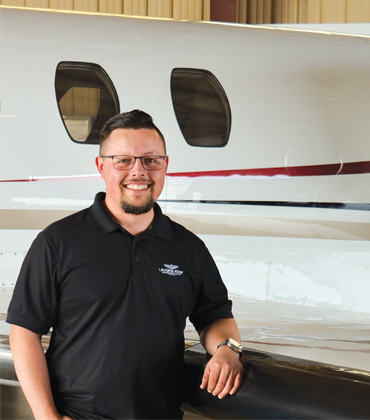 Tyson Mauldin, CEO
In the competitive world of aviation maintenance, only a few companies consistently rise above the rest by delivering superior quality, unwavering safety, and exceptional customer satisfaction. Leading Edge Aviation, Oklahoma’s fastest-growing and highly regarded piston aircraft shop, is one of these rare exceptions.
What sets Leading Edge Aviation apart from other aviation maintenance companies?
At the helm is CEO Tyson Mauldin, who has built a team that embodies a simple yet powerful philosophy: “Before we ever release that airplane, I reemphasize to each of my team members—would I put my own family in this aircraft?” This guiding question serves as the cornerstone of Leading Edge Aviation’s commitment to top-tier maintenance, ensuring that every aircraft is treated with the utmost care.
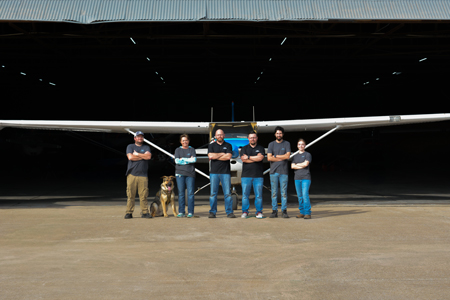
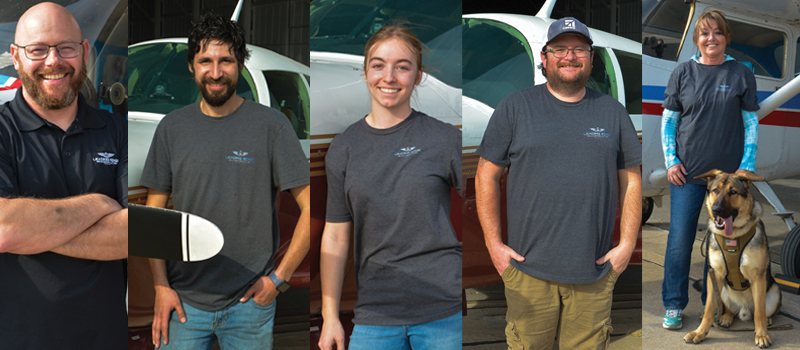 Josh G, Director of Maintenance, Daniel, Airframe Mechanic, Sarah Goff, A&P Mechanic, Tim, Senior A&P Mechanic and Kristy and Agis
With nearly two decades of aviation experience, Mauldin’s journey has shaped his belief that safety, reliability, and exceptional service form the foundation of trust between the company and its customers.
As a veteran-owned and operated business, Leading Edge Aviation provides a full range of aircraft maintenance services from its facility at C.E. Page Airport (KRCE) in Yukon, Oklahoma, while also offering mobile services throughout the Oklahoma City metro area and surrounding regions. Under Mauldin’s leadership, the company has earned a strong reputation for its meticulous approach to every job. Whether working in the hangar or out in the field, Leading Edge Aviation delivers the same level of expertise, safety standards, and customer-focused care to every aircraft it services.
Mauldin’s aviation journey began in the field as a mechanic and evolved into a deep commitment to quality maintenance. From his earliest days on the shop floor to building a successful company, he has remained true to his philosophy of safety first and a relentless drive to deliver the best possible work. This approach is not just a leadership style. It is the ethos that defines Leading Edge Aviation. His dedication to quality maintenance and uncompromising safety standards is shared by every team member, reinforcing the company’s promise that each aircraft is in the safest possible hands.
We want to be the company every aircraft owner trusts to keep their planes safe and reliable year after year. Our mission is not just to fix airplanes. It is to build a legacy of trust and excellence that lasts for generations.
High-Quality, Reliable Work at an Accessible Price
Mauldin’s passion for aviation began early in his career. After working his way from a shop-floor mechanic to a Production Supervisor at a Part 145 repair station, he developed a deep understanding of the complexities of aircraft maintenance. Through this experience, he identified a gap in the market for maintenance services that delivered high-quality, reliable work at an accessible price.
“I’ve always stressed to my team that we don’t put our names in aircraft logbooks unless we are absolutely confident that we would put our own children in that aircraft,” Mauldin explains.
This philosophy has become the foundation of Leading Edge Aviation’s culture, ensuring that every aircraft receives the highest standard of care, regardless of the size or scope of the job.
From Mobile Service to Full-Service Facility
Leading Edge Aviation began as a mobile maintenance service, an idea Mauldin believed could deliver real value to the aviation community. In 2024, he and a single mechanic began offering on-location aircraft maintenance using a small trailer and a willingness to travel wherever needed.
The concept was met with immediate enthusiasm from aircraft owners. Mobile maintenance allowed minor tasks such as oil changes, tire replacements, and routine inspections to be completed without the inconvenience of relocating aircraft. This added convenience quickly established Leading Edge Aviation as a trusted name in the region.
As demand grew, so did the scope of requests. Customers in locations such as Tulsa, Oklahoma, and the Texas Panhandle began reaching out, areas that were too distant for mobile service alone. This increase in demand led to the opening of a permanent location at C.E. Page Airport in January 2025.
With a dedicated hangar, Leading Edge Aviation expanded its service offerings to include certified weight and balance inspections, engine removals, and aircraft parts sales. A critical component of this expansion was the ability to stock and supply certified parts that meet the highest safety standards. Mauldin’s attention to detail in sourcing quality materials and tools further strengthened the company’s reputation as the superior maintenance provider in the region.
-
Before we ever release that airplane, I reemphasize to each of my team members—would I put my own family in this aircraft?
Despite the company’s growth, Mauldin is quick to emphasize that its core philosophy remains unchanged. “We’re not the cheapest shop, but we are the best,” he says. Rather than competing on price, the company focuses on delivering work owners can trust. As a result, Leading Edge Aviation has built a loyal customer base that values safety, reliability, and professionalism.
How did Leading Edge Aviation transition from a mobile service to a full-service facility?
The Fleet Maintenance Program: Providing Reliable Service
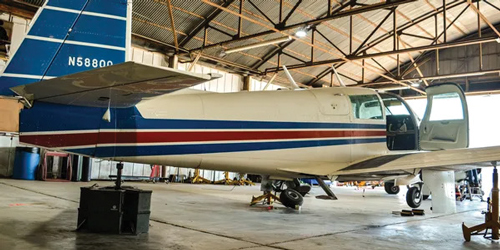 One of Leading Edge Aviation’s most valuable offerings is its Fleet Maintenance Program, designed specifically for flight schools and flying clubs. For these operators, downtime directly impacts revenue, and minimizing ground time is critical.
Mauldin recalls a local flight school that has relied on his services for more than two years.
“Before they worked with us, they used a mechanic who didn’t offer mobile service. Every time an aircraft needed maintenance, they had to transport it to another airport, which caused significant downtime,” he explains.
By introducing mobile maintenance, Leading Edge Aviation allowed the flight school to schedule work around its operations. Mechanics arrived on-site, regardless of distance, and completed maintenance without disrupting flight schedules. The Fleet Maintenance Program evolved into a critical support system, offering 24/7 availability for routine and emergency maintenance while significantly reducing downtime.
This flexibility enables flight schools to keep aircraft operational throughout the day. In one instance, when an aircraft experienced an emergency maintenance issue during a cross-country flight, Leading Edge Aviation dispatched a mechanic with the required parts within two hours, returning the aircraft to service with minimal disruption.
How did Leading Edge Aviation’s Fleet Maintenance Program reduce downtime for flight schools?
The People Behind the Work
A defining differentiator for Leading Edge Aviation is its team. Mauldin places a strong emphasis on building a culture that values people as much as performance.
The company employs a small but dedicated team of five licensed mechanics and a parts manager, all with extensive experience in aviation maintenance. Mauldin’s leadership approach fosters respect, accountability, and camaraderie.
“I tell my team all the time that family comes first,” he says. “If someone needs to leave early because their child is sick, they can do so without hesitation. We support each other, and that support makes us stronger.”
This environment has created a workforce deeply committed to the company’s mission and quality standards. Each team member understands the importance of their role and takes pride in upholding the reputation Leading Edge Aviation has earned.
Regulatory Compliance and Safety Standards
 As Leading Edge Aviation expands its capabilities, maintaining strict compliance with Federal Aviation Administration regulations remains a top priority. Although the company is not currently a Part 145 repair station, Mauldin and his team adhere to equivalent standards. This includes using the most current technical manuals and ensuring that all procedures meet or exceed FAA requirements.
“We have a strong relationship with the local FAA office,” Mauldin says. “They inspect us regularly, not because there are problems, but because they want to see how we operate. We take pride in exceeding compliance standards.”
Mauldin’s commitment to staying current with regulatory updates ensures that Leading Edge Aviation continues to meet the highest safety and compliance benchmarks.
How does Leading Edge Aviation ensure regulatory compliance and safety standards?
Expanding Horizons
While Leading Edge Aviation has already made a strong impact in piston aircraft maintenance, Mauldin’s vision extends further. The company is preparing to expand into maintenance for small turboprop and jet aircraft, an effort that requires new tooling, advanced training, and manufacturer certifications.
“We already have our first turboprop customer,” Mauldin says. “We performed a pre-purchase inspection on a King Air E90 for a client in Minnesota. He was impressed enough with our service to bring the aircraft to us for ongoing maintenance.”
This experience reflects the company’s readiness to support larger and more complex aircraft. By investing in training, equipment, and certifications, Leading Edge Aviation is positioning itself for continued growth.
In parallel, Mauldin has begun discussions with major aircraft manufacturers about becoming an Authorized Service Center. His long-term vision is to establish Leading Edge Aviation as a nationwide presence, delivering consistent service standards across multiple locations.
As Mauldin explains, “We want to be the company every aircraft owner trusts to keep their planes safe and reliable year after year. Our mission is not just to fix airplanes. It is to build a legacy of trust and excellence that lasts for generations.”
Raising The Standard in Aircraft Maintenance Services
Aircraft owners and fleet operators face a narrow margin for error when selecting an aircraft maintenance provider. Safety expectations are absolute, regulatory oversight is constant and downtime directly affects revenue, training schedules and asset value. Price alone rarely determines long term satisfaction. Confidence in workmanship, predictability of cost and the ability to minimize ground time shape executive decisions far more than headline labor rates.
The most reliable maintenance partners tend to share three traits. They apply a clear safety philosophy that guides every release to service. They communicate with precision, especially when scope changes arise. They organize their workforce and processes in a way that reduces downtime without compromising regulatory discipline.
A safety philosophy must extend beyond compliance language. Executives should look for evidence that the provider’s leadership has direct operational perspective and sets a non negotiable standard for release decisions. When maintenance teams treat each sign off as if their own family would board the aircraft immediately afterward, that mindset influences inspection depth, documentation discipline and tool control. It also signals that shortcuts are culturally unacceptable, even under schedule pressure.
Transparent cost management is equally important. Aviation leaders are familiar with the frustration of receiving an initial estimate that bears little resemblance to the final invoice. The more dependable facilities manage this risk through detailed quoting, realistic labor assumptions and immediate communication when troubleshooting expands the scope of work. That approach preserves trust and allows owners to make informed decisions before costs escalate. The objective is not to be the lowest priced shop in the region, but to ensure there are no surprises.
Downtime management separates competent providers from strategic partners. Flight schools, charter operators and flying clubs operate on tight margins where each grounded aircraft affects revenue and customer satisfaction. A maintenance partner that forecasts inspection intervals, monitors hour accumulation and deploys teams quickly for unscheduled events reduces disruption in measurable ways. The ability to dispatch for aircraft on ground situations, perform inspections within compressed timelines and coordinate larger structural or avionics work through trusted networks reflects an integrated service model rather than reactive repair.
Regulatory posture remains another signal of maturity. Facilities that operate with repair station discipline, maintain current technical data subscriptions and use calibrated tools demonstrate commitment beyond minimum compliance. A collaborative relationship with local FAA inspectors and a workforce drawn from regulated repair environments indicate that quality control systems are embedded in daily practice rather than assembled for audits.
Leading Edge Aviation exemplifies these characteristics within the general aviation and growing business aircraft segment. It began as a fully mobile maintenance operation, bringing oil changes, tire service and troubleshooting directly to aircraft owners. That mobility remains central to its fleet maintenance program, which provides retainer based access, rapid dispatch and proactive inspection scheduling for flight schools and clubs. Since establishing its hangar at Page Airport, it has expanded in house capabilities to include weight and balance, engine removals, component balancing and a traceable parts inventory managed by a dedicated parts manager.
The company operates its facility to repair station standards, employs licensed mechanics, maintains current maintenance manual subscriptions and relies on calibrated equipment. It communicates openly when troubleshooting uncovers additional labor, preserving cost clarity. For executives evaluating aircraft maintenance services, Leading Edge represents a disciplined, safety centered provider capable of reducing downtime while maintaining regulatory integrity and predictable service delivery.
...Read more
Aircraft Maintenance Service Info
Q1
Why is Leading Edge Aviation recognized among top Aircraft Maintenance Services providers?
Leading Edge Aviation has built a strong reputation in Aircraft Maintenance Services by combining safety-focused maintenance practices with responsive customer support and technical precision. The company operates with a philosophy centered on airworthiness and accountability, reinforcing every maintenance release decision with strict internal quality expectations. Its veteran-owned operational culture, experienced licensed mechanics and expanding maintenance capabilities have helped establish Leading Edge Aviation as one of Oklahoma’s fastest-growing piston aircraft maintenance providers.
Q2
What differentiates Leading Edge Aviation in aircraft maintenance and repair support?
Mobile maintenance flexibility and disciplined workmanship distinguish Leading Edge Aviation within the Aircraft Maintenance Services sector. The company began as a field-based maintenance operation capable of performing on-site inspections, oil changes and troubleshooting directly at customer locations before expanding into a full-service facility at C.E. Page Airport. Its technicians support piston aircraft, turboprop platforms and growing turbine maintenance programs while maintaining traceable parts sourcing, calibrated tooling and FAA-aligned maintenance procedures. That combination of mobility, technical depth and process discipline strengthens reliability for aircraft owners and operators.
Q3
How does Leading Edge Aviation support aircraft owners and fleet operators with maintenance planning?
Downtime management plays a central role in how Leading Edge Aviation delivers Aircraft Maintenance Services. The company’s Fleet Maintenance Program supports flight schools and flying clubs by scheduling maintenance around operational demands rather than disrupting flight activity unnecessarily. Mobile service teams can travel directly to customer locations for routine maintenance and emergency repairs, reducing the need to relocate aircraft for basic service work. In urgent situations, technicians can also dispatch with replacement parts to return grounded aircraft to service more efficiently.
Q4
How do Aircraft Maintenance Services improve aircraft reliability and operational continuity?
Aircraft reliability depends heavily on maintenance consistency, inspection quality and timely repairs. Leading Edge Aviation provides Aircraft Maintenance Services designed to support airworthiness, reduce avoidable downtime and strengthen long-term aircraft performance. Its capabilities include annual inspections, engine removals, propeller balancing, structural repairs and troubleshooting support for both routine and unscheduled maintenance needs. Consistent maintenance planning also helps operators manage operating costs more effectively while preserving aircraft safety and asset value over time.
Q5
What role does technical expertise play in Leading Edge Aviation’s service model?
Aircraft maintenance requires deep familiarity with FAA procedures, technical documentation and evolving inspection standards. Leading Edge Aviation applies decades of aviation experience to its Aircraft Maintenance Services through licensed mechanics, current maintenance manual subscriptions and structured quality control practices. The company also maintains strong coordination with FAA oversight offices while operating its facility to standards comparable to regulated repair stations. That technical discipline supports accurate diagnostics, compliant repairs and stronger confidence in completed maintenance work.
Q6
Why are Aircraft Maintenance Services becoming increasingly important in aviation?
Aircraft operators continue to face growing pressure to maximize fleet availability while maintaining strict safety and compliance standards. Leading Edge Aviation operates in a market where Aircraft Maintenance Services have become increasingly important because aging aircraft fleets, rising utilization rates and maintenance backlogs continue to affect aviation operations globally. Industry discussions also show increasing demand for maintenance providers capable of combining responsive service, regulatory discipline and reduced downtime support within a single operational framework.
Company :
Leading Edge Aviation
Management Tyson Mauldin, CEO
Josh G, Director of Maintenance, Daniel, Airframe Mechanic, Sarah Goff, A&P Mechanic, Tim, Senior A&P Mechanic and Kristy and Agis
Description
Leading Edge Aviation, under CEO Tyson Mauldin, is redefining the standards of aircraft maintenance by emphasizing safety, technical expertise, and exceptional customer service. From mobile services to a full-service facility, Leading Edge’s philosophy prioritizes trust and quality above all.