

Thank you for Subscribing to Transportation Review Weekly Brief

Cargoways Group
Terence R. Campbell, Transportation Manager
Building People Who Can Lead and Deliver
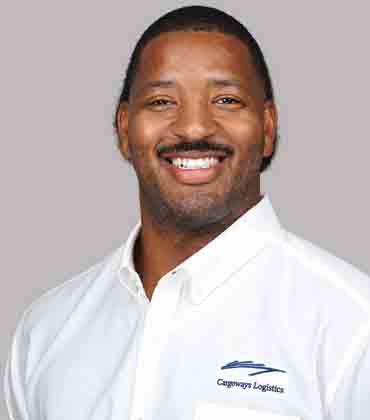
Terence R. Campbell
Rebuilding a Team through Trust and Ownership
Earlier in my career, I worked in sales, where much of my success depended on my own effort. I was comfortable taking ownership, solving problems and getting things done. But transitioning into asset-based transportation operations taught me that being responsible for the work and being responsible for the people doing the work are two different things.
One of my biggest challenges came when I took responsibility for a department that had already lost roughly 95 percent of its workforce.
Before we could improve performance, we had to rebuild the team. I needed to convince people that this was a department worth joining .
During recruitment, I shared something personal: I'd become familiar with stepping into difficult situations I hadn't created. That resonated with people. I told them I would support them, work alongside them, and help us build something better. I also knew I had the support of our executive team.
What I didn't fully understand was how much I still needed to learn about fulfilling that commitment.
Some of the best people I worked with weren't necessarily the most experienced. They were the ones willing to step into uncertainty, take ownership and keep learning under pressure. They believed in what we were building, even when our processes weren't fully developed.
Through recruiting, stronger relationships, and a healthier working environment, we began seeing results. Initially, our turnaround times were running roughly two hours behind target. Eventually, we were consistently finishing ahead of schedule.
Learning When to Let Go
We became so focused on beating the clock that we sometimes overlooked what happened along the way.
Stations weren't always cleaned. Other departments couldn't locate materials. Team leads sometimes needed direction and couldn't reach me.
Meanwhile, I was spending about an hour handling a routine task that someone else could have been trained to do. One day, an executive told me something I've never forgotten:
"That very thing you do every day is crippling someone who desperately wants responsibility."
He was right.
I believed in delegation, but I enjoyed doing the work myself. There was satisfaction in knowing something had been completed correctly because I'd personally handled it.
What I hadn't considered was the opportunity I was taking away from someone else.
I delegated that task to a team member. Not only did they handle it well, but they also found a way to shorten the process, tested their approach, and eventually trained someone else to take it over.
Something I'd been holding onto became an opportunity for someone else to grow. And I regained time to lead.
One of my biggest challenges came when I took responsibility for a department that had already lost roughly 95 percent of its workforce.
Equipping People to Move Forward Together
I've come to think about leadership like moving a boulder. There's an enormous objective in front of you, something no single person can accomplish alone. You bring people together, explain the destination and give everyone a responsibility.
But you can't simply point at the boulder and demand that people move it.
You have to equip them, understand what's slowing them down, and be willing to help. They also have to take ownership of their own development. You can provide an opportunity, but someone has to choose to grow into it.
The business still needs results. Customers, revenue, deadlines and profitability matter. But developing capable people is part of achieving those results sustainably.
When I made myself more available, people began communicating more openly. Some brought concerns about moments when they felt I hadn't supported them. I apologized where I needed to, and I believe that helped build trust.
Then I learned another lesson.
I'd made myself so accessible that I was becoming overwhelmed with issues that should have been addressed through our team leads and coordinators.
I needed to develop those leaders to become the same source of support for their people that I was trying to become for mine.
I wasn't supposed to be everyone's solution. I was supposed to help build a team capable of finding solutions together.
And that's something I'm still learning.
Measuring Leadership by What Others Become
People aren't all the same, and no two situations are exactly alike. I've learned that knowing your people isn't separate from running a successful operation. It's part of the work.
Sometimes development means giving someone responsibility and training them to succeed. Sometimes it means removing an obstacle. And sometimes it means listening and being willing to hear where you could have done better.
I don't believe leadership is measured only by what we accomplish while we're in charge. I believe it's also measured by what the people around us become capable of accomplishing because we were there.
The articles from these contributors are based on their personal expertise and viewpoints, and do not necessarily reflect the opinions of their employers or affiliated organizations.
