
Thank you for Subscribing to Transportation Review Weekly Brief

Lufthansa Cargo
Marco Sperling, Director Sales and Handling
Sustainability and Development in Freight Management
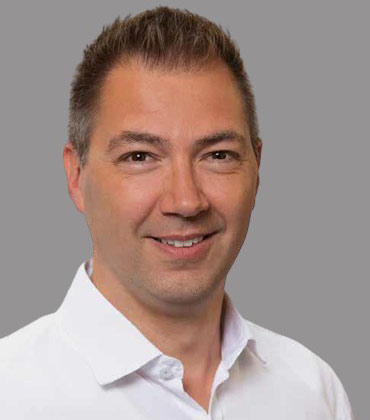
Marco Sperling
As the director and handling of leading companies in freight management, what are the problems that your customers have come to you with and what are some of the effective resolutions you have offered as a thought leader?
One of the key significant challenges in the business now is volatility. Over the pandemic, due to the travel restrictions, overflight limitations, lockdowns, staff shortages and other issues has forced us to find creative solutions. Our network colleagues have done a great job trying to create stable operations and stable flight programs for our customers. Our flight crews have gone more than the extra mile for us. The second main challenge is sustainability. As all the disruptions slowly normalise, sustainability becomes a part of the daily agenda. We have a variety of initiatives for many years now and we aim to be the industry leader for a sustainable future and explain these initiatives we do, discuss it with our customers. The options they have to book sustainable cargo is a part of daily communication with customers. The economic outlook is another significant challenge, moving forward. Everyone wants to see the future, two-three years ahead, to find the correct dimension for production systems and for their products, but only the future can dictate where the development will go. What are the efforts that Lufthansa Cargo made to cut short carbon footprints while delivering goods? At Lufthansa Cargo, we are committed to reduce our net CO2 emissions by 50 percent by 2030, based on the 2019 emissions and until 2050, we will be CO2 neutral. This is mainly due to modern aircraft and newer jet engines. With every new aircraft or new jet engine generation, the fuel consumption will be lowered by 30 percent. This is the biggest investment that we made as Lufthansa and Lufthansa Cargo. We have a state-of-the-art special film that we apply to the aircraft skin called ‘Aeroshark’. It's a foil or film that simulates the skin of a shark and it reduces fuel consumption, which adds up to 13,000 tons of CO2 per year. When looking at the traditional ways of saving fuel, saving will have a natural limitation. Eventually, the industry needs to stop depending on kerosene. We also enable our customers to buy sustainable aviation fuel. The customers can book cargo and can book an add-on where Lufthansa applies sustainable furl to the amount of cargo they have booked. As a collaboration with DB Schenker, we have a weekly flight from Frankfurt to Shanghai, which is operated 100 percent with sustainable fuel and its a huge saver, but it has limitations as it comes from food residuals. We are looking into power-to-liquid options and we retain the world’s first power-to-liquid plant, opened in October of 2021. It is a synthetic COS2-neutral kerosene. It is currently in a laboratory environment and over the next few years, it’s going to scale largely.We are developing a sustainable culture withinLufthansa that goes beyond technological improvements
The articles from these contributors are based on their personal expertise and viewpoints, and do not necessarily reflect the opinions of their employers or affiliated organizations.
