
Thank you for Subscribing to Transportation Review Weekly Brief

BNSF Railway
John Lovenburg, Vice President, Environment and Sustainability
Transforming Freight Transportation through Sustainable Innovation
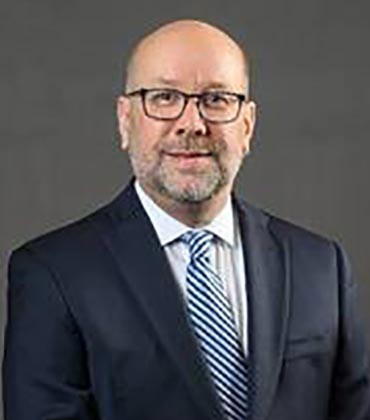
John Lovenburg
John Lovenburg is an environmental and sustainability leader who drives climate action, advanced energy innovation and remediation solutions across complex industrial systems. He blends technical depth with practical strategy to reduce emissions, strengthen operational resilience and advance sustainable development, consistently elevating environmental performance across large-scale freight operations.
Early Career Foundations: Mentorship and Innovation Inspired Leadership A “tap on the shoulder” from a regional staffing leader was a pivotal early moment. She told me she kept landing on my name as she was thinking about future leader candidates. Despite only having 7 years of experience, she wanted me to lead a group of 20 technical staff in Southern California. She became a great mentor, giving me confidence, building my leadership skills and teaching me about sustainable solutions. The other aspect of my consulting experience was leading challenging sustainability projects and programs that created environmental and business win-wins for customers. A developer approached us about an incendiary bomb plant that had been idle for over 50 years. It was a high-risk project that nobody else would tackle that we cleared using innovative remote assessment technologies, resulting in a new productive industrial development project at a fraction of the cost. At BNSF, our teams made early progress in rapidly reducing remediation liabilities through proactive and innovative remediation approaches. That success enabled expansion of our department scope to include sustainability – first permitting & sustainable development, then renewable energy & energy efficiency, followed by advanced energy innovation and support for sustainable business market growth. Integrating Sustainability Measures: Carbon Reduction and Circular Initiatives Let me start with decarbonization. The railroad is feeling, adapting to and mitigating the effects of climate change on operations, especially wildfires over broader geographies and expanding seasons. Also, roughly a third of our customers have carbon targets that include supply chain carbon, so our carbon reduction efforts contribute to their carbon reductions. And we have a carbon target that we’ll achieve through fuel efficiency measures and biofuels. We’re at 18 percent reduction through the end of 2024 – making solid progress towards our 30 percent reduction target by 2030. BNSF examples of deploying circular economy principles are our oil recycling efforts where our waste oils are upcycled for reuse. And we remanufacture locomotives every 10 years, creating more fuel efficient and cleaner locomotives; contrast that with the trucking industry, where tractors get crushed and melted at end of life after 12 to 15 years, increasing carbon emissions.We use biofuels to cut our carbon emissions and moving the biofuels supply chain is an important and growing rail market, as they leverage Federal and State subsidies to economically compete with traditional crude oil-based fuels.
The articles from these contributors are based on their personal expertise and viewpoints, and do not necessarily reflect the opinions of their employers or affiliated organizations.
