
Thank you for Subscribing to Transportation Review Weekly Brief
This article is part of Transportation Review's Insights series featuring expert contributions nominated by our subscribers and reviewed by our editorial team.
Growing beyond Residential Moving
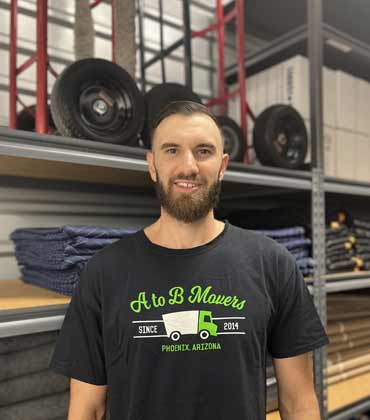
When I took ownership of A to B Movers, the company was only servicing residential jobs in the Phoenix area. I needed to make significant changes to the company’s operations. So, I felt it would be best to have continuity of work during that process, and we stayed doing solely residential for almost two years.
In our first experience with commercial work, we were approached by a general contractor to bid on a job removing and installing furniture, fixtures and electronics in a casino resort. A bidding portal for multiple trades regularly posts commercial jobs. After winning the bid for removal during three weeks, we returned the next year to install. This job ended up being one of the biggest challenges of my professional career. In any case, it taught me about the pros and cons of moving commercially. As our residential demand increased, we began taking on more commercial opportunities.
My approach to client service has evolved in many ways but there is one area that stands out. It is all about communication, aside from the actual work. In life and especially in client relationships, this is the key. Setting clear expectations and timelines is essential. Managers, foremen, general contractors and owners may be involved. Maintaining on schedule and completing the job successfully will depend on knowing the hierarchy of authority and determining who the right person is to work with.
Managing Risk in Commercial Projects
A major challenge I've faced in managing commercial moves is resource allocation. Residential work involves only the customer and us. Autonomous work schedules. That is not how it works on the commercial side.
Our first commercial job was a significant challenge, as I mentioned earlier. According to the parameters we were given, we would finish our part of the job in three weeks with two 26' trucks and a 10-man crew. Our availability to be on site was cut from seven days a week, 8 am to 6 pm, to five days a week, 9 am to 4 pm on our third day. Within three weeks, we have saved over 4 working days. As a result, I added more labor. Problem solved, I thought.
On the fifth day, they discovered mold in the walls. Things went awry here. In addition to wearing full PPE, restricting access to one entrance, moving the property to another location that could take away the mold-covered items, and removing mold with demolition that was scheduled to begin after we finished, we had to work with them. It was a confined space, with full PPE and a full demo crew to contend with.
Due to constant schedule changes and limitations, the job ended up taking 6 weeks, roughly twice the resources originally allocated. Our staff retention, as well as cash flow were boosted by residential work to supplement commercial work. The payment took over three months after we finished the job, almost five months after we started.
Contractors in AZ have 30 days to pay invoices. The company was international, and they did not care about AZ laws. Our residential work kept us afloat.
It taught me that no matter how good an opportunity seems, you cannot overexpose yourself. The company needs to be able to endure if the worst happens and you are not paid for your work. Having other revenue streams is also important.
Adapting to Evolving Client Needs
Being prepared for anything has been the key to our success in cooperate relocations. Things are going to change on almost every job. Having additional resources and redundancies on standby is a must. You need to have additional labor, equipment, etc., available and ready to implement at any time. This will allow the job to continue as expected, regardless of the situation, and in turn will keep clients happy. The fewer problems they have to solve, the better you look.
Currently, we are seeing a lot of large operations looking to minimize their footprint with WFH and hybrid work becoming commonplace. This reduces the need for large office complexes, and we have helped companies downsize into more effective spaces.
There is also a rising demand in companies that offer eco- friendly or sustainable resources. Reusables like totes over corrugated materials, recycling and eco-friendly trucks are all becoming more desired.
Advice for Emerging Leaders
A successful career in commercial moving is not an overnight process. Learning from the ground up is the best way, in my opinion. If you know all the aspects of a job, this will aid in more effective management and delegation of responsibilities or resources. Communication is key; from employees to clients, you need to sharpen this skill at every opportunity. And lastly, do not be afraid of hard work. Every commercial job we have done has been a harder undertaking than expected, but completing them is one of the more satisfying feelings you can have in the service industries.
When I took ownership of A to B Movers, the company was only servicing residential jobs in the Phoenix area. I needed to make significant changes to the company’s operations. So, I felt it would be best to have continuity of work during that process, and we stayed doing solely residential for almost two years.
In our first experience with commercial work, we were approached by a general contractor to bid on a job removing and installing furniture, fixtures and electronics in a casino resort. A bidding portal for multiple trades regularly posts commercial jobs. After winning the bid for removal during three weeks, we returned the next year to install. This job ended up being one of the biggest challenges of my professional career. In any case, it taught me about the pros and cons of moving commercially. As our residential demand increased, we began taking on more commercial opportunities.
My approach to client service has evolved in many ways but there is one area that stands out. It is all about communication, aside from the actual work. In life and especially in client relationships, this is the key. Setting clear expectations and timelines is essential. Managers, foremen, general contractors and owners may be involved. Maintaining on schedule and completing the job successfully will depend on knowing the hierarchy of authority and determining who the right person is to work with.
Managing Risk in Commercial Projects
A major challenge I've faced in managing commercial moves is resource allocation. Residential work involves only the customer and us. Autonomous work schedules. That is not how it works on the commercial side.
Our first commercial job was a significant challenge, as I mentioned earlier. According to the parameters we were given, we would finish our part of the job in three weeks with two 26' trucks and a 10-man crew. Our availability to be on site was cut from seven days a week, 8 am to 6 pm, to five days a week, 9 am to 4 pm on our third day. Within three weeks, we have saved over 4 working days. As a result, I added more labor. Problem solved, I thought.
On the fifth day, they discovered mold in the walls. Things went awry here. In addition to wearing full PPE, restricting access to one entrance, moving the property to another location that could take away the mold-covered items, and removing mold with demolition that was scheduled to begin after we finished, we had to work with them. It was a confined space, with full PPE and a full demo crew to contend with.
-
Things are going to change on almost every job. Having additional resources and redundancies on standby is a must.
Due to constant schedule changes and limitations, the job ended up taking 6 weeks, roughly twice the resources originally allocated. Our staff retention, as well as cash flow were boosted by residential work to supplement commercial work. The payment took over three months after we finished the job, almost five months after we started.
Contractors in AZ have 30 days to pay invoices. The company was international, and they did not care about AZ laws. Our residential work kept us afloat.
It taught me that no matter how good an opportunity seems, you cannot overexpose yourself. The company needs to be able to endure if the worst happens and you are not paid for your work. Having other revenue streams is also important.
Adapting to Evolving Client Needs
Being prepared for anything has been the key to our success in cooperate relocations. Things are going to change on almost every job. Having additional resources and redundancies on standby is a must. You need to have additional labor, equipment, etc., available and ready to implement at any time. This will allow the job to continue as expected, regardless of the situation, and in turn will keep clients happy. The fewer problems they have to solve, the better you look.
Currently, we are seeing a lot of large operations looking to minimize their footprint with WFH and hybrid work becoming commonplace. This reduces the need for large office complexes, and we have helped companies downsize into more effective spaces.
There is also a rising demand in companies that offer eco- friendly or sustainable resources. Reusables like totes over corrugated materials, recycling and eco-friendly trucks are all becoming more desired.
Advice for Emerging Leaders
A successful career in commercial moving is not an overnight process. Learning from the ground up is the best way, in my opinion. If you know all the aspects of a job, this will aid in more effective management and delegation of responsibilities or resources. Communication is key; from employees to clients, you need to sharpen this skill at every opportunity. And lastly, do not be afraid of hard work. Every commercial job we have done has been a harder undertaking than expected, but completing them is one of the more satisfying feelings you can have in the service industries.
MORE FROM INNOVATION INSIGHTS

All Chemical Transport
Anthony Coruccini, COO
All Chemical: Leading the Way With a New Standard of Transportation with Chief Operating Officer, Anthony Coruccini.
Shipco Transport
Ryan Murphy Vice President, U.S. Inland & E-Commerce; Nishi DeMond General Manager, Domestic
First and Final Mile Solutions for Air and Ocean Freight Shipments

Chief Capital Corp
Adrian Cormick, Chief Operating Officer
One Mission, One Standard: Raising the Bar Across Aviation and Corporate Security
EXPLORE OUR KNOWLEDGE NETWORK
The articles from these contributors are based on their personal expertise and viewpoints, and do not necessarily reflect the opinions of their employers or affiliated organizations.
