
Thank you for Subscribing to Transportation Review Weekly Brief
Transportation Review: Specials magazine
Precise monitoring of assets such as tracks and wheels is essential to rail safety. Focus Sensors leverages the power of fibre-optic networks and sensors to monitor and deliver continuous insights into track stability, wheel health, early warning signs of failure and even the presence of intruders. The idea was born from a simple conversation between two friends, Dr Ed Austin and Dr Weizhong Zhao, in a pub in Winchester. They wondered why the optical fibres already installed for communications couldn’t be used as sensors to improve the safety and efficiency of rail infrastructure. This thought sparked two years of experimentation in a drafty garage, culminating in the creation of Indus, a distributed sensing system that provides rail operators with continuous visibility into track and infrastructure health. They later built the Indus Platform, a cloud-based system that turns data from Indus into real-time insights that operators can act upon. “Our unique, patented, fibre-monitoring system opens the door to vast and continuous railway monitoring, solving problems for our customers,” says Dr Austin, co-founder and managing director. Indus combines fibre optic movement sensing (FOMS) and acoustic sensing (FOAS) to interpret how the track, its support structure and passing trains behave in real-time. By comparing how the track responds over time, the system detects subtle changes that would otherwise go unnoticed. Focus Sensors’ technology has been deployed in multiple locations around the world. It works with major operators, including Network Rail, ProRail and ADIF. Each Indus station monitors up to 80 kilometres of track with one-metre resolution. Installation is typically completed within four hours without requiring access to the track. Its collaboration with Network Rail High Speed on the HS1 route demonstrated how optical signals could be translated into actionable insight. Over the course of six months, more than 11 million measurements were taken along 38 kilometres of track. It revealed issues in switch and crossing components by showing abnormal vibration patterns and elevated track instability at the failing component. Eventual successful repair reduced the instability, as expected. Furthermore, Indus uncovered areas of increased track instability 50m from the faulty component, providing a probable reason for the failure.

Railcar Repair and Maintenance Services
Railcar and logistics companies face significant challenges in finding reliable service providers for valve reconditioning. Long repair times, poor management, and subpar quality can disrupt operations and lead to costly downtime. To maintain efficient fleet operations, companies need solutions that offer high-quality reconditioning, reduced repair times, and personalized service. Liberty Rail Services offers a comprehensive range of valve reconditioning and testing services, addressing the critical needs of the rail, barge, pipeline, and trucking industries. By streamlining processes and reducing turnaround times, Liberty helps clients minimize downtime and optimize fleet maintenance. Its specialized services include the reconditioning of various valve types, such as ball valves, angle valves, safety valves, vacuum relief valves, gauging devices, thermowells, sample valves, and safety vents. We possess a C5 activity code, enabling us to perform tasks on rail cars. We also implement an internal safety program, with repetitive training for all staff. This includes extensive quality training on various valve types to ensure our team maintains high standards The company’s six-step reconditioning process guarantees that every valve meets or exceeds industry standards. It begins with an inbound inspection to verify valve specifications, followed by disassembly and thorough cleaning. Each valve is then inspected in detail against manufacturer standards. Next, the valve is precisely reassembled using the correct lubricants and torque settings. Non-destructive testing ensures the valve complies with all standards. Finally, an outbound inspection confirms that all customer requirements are met. This process ensures the reliability and quality of every reconditioned valve.

Railcar Manufacturing and Leasing Services

The Greenbrier Companies, a global leader in transportation manufacturing and services, has spent over four decades rewriting the future of freight rail, driven by innovation and sustainability at every turn. Founded in 1919 as Gunderson Brothers in Portland, Oregon, the company quickly shifted from steel fabrication to manufacturing railcars. A key milestone came in 1985 with the Twin-Stack® railcar, a design that transformed intermodal transportation and set the foundation for Greenbrier’s success. Over the years, Greenbrier expanded its footprint globally, establishing major manufacturing plants in Mexico, Poland and Brazil. In 1999, the company introduced the Auto-Max® railcar, changing the landscape of automotive logistics. Its commitment to safety took a leap forward in 2014 with the launch of the ‘Tank Car of the Future,’ setting new industry safety standards. Today, Greenbrier continues to lead the way, embracing technology like RailPulse™ for GPS tracking in freight rail. Under the leadership of CEO Lorie Tekorius, the company is focused on driving the future of rail, prioritizing efficiency, safety and environmental responsibility. Greenbrier’s commitment to progress is clear—it is not just adapting to the future, but actively shaping it. Advancing Rail Technology As one of North America’s leading railcar manufacturers, Greenbrier produces over 25,000 high-quality railcars annually. Renowned for award-winning designs and longevity of up to 50 years, its diverse portfolio includes single-, bi- and tri-level auto carriers, versatile boxcars, durable centerbeams, covered hoppers, heavy-duty flatcars and tank cars for liquid and gaseous commodities. Built for efficiency and reliability, Greenbrier’s railcars are trusted to handle everything from bulk materials to specialized freight with unmatched performance. Beyond manufacturing, Greenbrier excels in providing comprehensive railcar services, including leasing, management and maintenance. These offerings ensure end-to-end solutions for customers, enabling them to optimize operations and enhance profitability.
CXO INSIGHTS
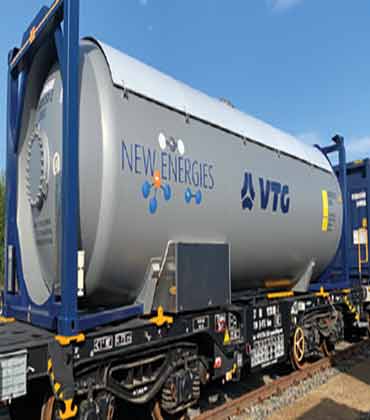
The Future is on the Rails
Stefan Siegemund, Business Development Manager New Energies, VTG

Marketing as a True Driver of Business Growth
Oscar Santamaria, Marketing and Brand Director, iryo
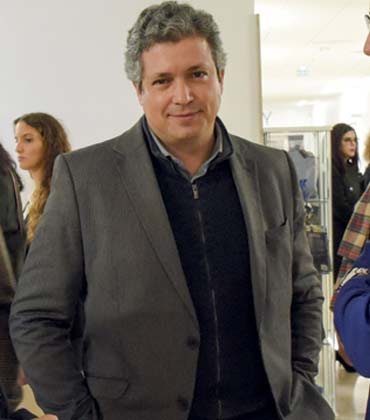
Keep Up With the Pace in Logistics
Miguel Cordeiro, Director Information Technology System, Rangel Logistics Solutions

Why Putting People First is the Smartest Supply Chain Strategy
Natasha Rich, Manager of Supply Chain Operations, OIA GLOBAL

Building Ecosystems for Smarter Traffic Management
Janne Lautanala, Chief Ecosystem and Technology Officer, Fintraffic

Decarbonizing Transport and Logistics: A Practitioner's Reflection on Moving from Pilot Projects to Scalable Solutions
Kenneth Riis Jensen, Vice President, Global Sustainability, Road division, DSV - Global Transport and Logistics

How Integrated Duty Management Can Power Cross-Border Expansion
Lisa Cottingham, Head of UK Customs, Bleckmann


IN FOCUS
Europe's Move to Distributed Railway Fibre Sensor Systems
Distributed fibre sensors improve railway safety, maintenance, and efficiency across Europe by delivering real-time, continuous monitoring for track, structure, and environment using scalable optical technologies.
Smarter Rail Transport in Europe: Leveraging Distributed Fibre Sensor Technology
Distributed railway fibre sensor systems enhance European rail safety, efficiency, and connectivity through advanced monitoring, predictive analytics, and real-time data integration.
EDITORIAL
Fibre Technology is Strengthening Rail Monitoring Across Europe
Rail infrastructure across Europe is entering a crucial moment in which dependable performance and timely insights matter more than ever, and distributed railway fibre sensor systems are shaping this transition with transformative influence. By converting optical fibre into a continuous, trackside sensing medium, the technology enables operators to detect subtle shifts in vibration, movement and environmental conditions that are often missed by conventional monitoring methods.
This continuous stream of information creates a unified understanding of track health, allowing maintenance teams to act with clarity rather than uncertainty. The system follows the entire rail line, capturing signals across its length and translating them into meaningful guidance that helps identify emerging stress points before they affect operations. As teams receive clearer visibility into changing conditions, planning becomes more accurate, and interventions become more purposeful.
The impact scales across the wider European rail ecosystem, where improved situational awareness supports smoother traffic flow and stronger operational control. Real-time insight empowers operators to maintain dependable service without relying on reactive measures that disrupt schedules or increase risk. By embracing fibre-based sensing as part of modern rail strategy, operators reinforce their commitment to building infrastructure that stays ahead of challenges and supports a safer, more resilient future for rail transport.
In this edition, we explore how distributed railway fiber sensor systems are advancing through intelligent engineering, more connected monitoring workflows and a growing focus on operator confidence across Europe. These developments are shaping the future where continuous track awareness and digital innovations make every stage of rail management easier to predict, maintain, and control.
We also present insights from expert CXOs, including Piotr Sedziak, Supply Director at Orbico Group, and Rick White, Director of 3PL Services at Cardinal Global Logistics. We hope the valuable insights from industry leaders, along with the solutions and services featured in this edition, will help you make informed decisions for your business.
