
Thank you for Subscribing to Transportation Review Weekly Brief


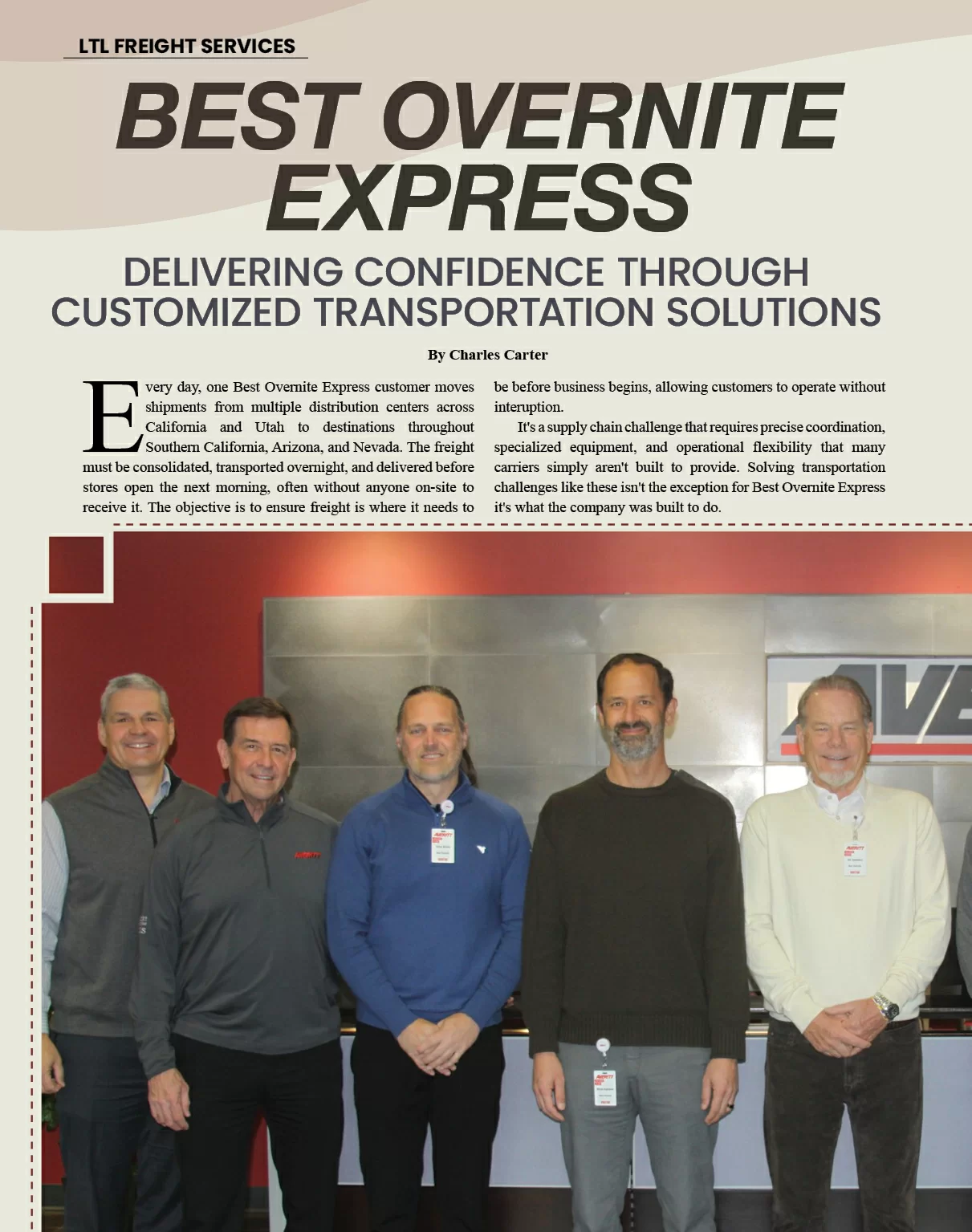
Every day, one Best Overnite Express customer moves shipments from multiple distribution centers across California and Utah to destinations throughout Southern California, Arizona, and Nevada. The freight must be consolidated, transported overnight, and delivered before stores open the next morning, often without anyone on-site to receive it. The objective is to ensure freight is where it needs to be before business begins, allowing customers to operate without interuption.
It's a supply chain challenge that requires precise coordination, specialized equipment, and operational flexibility that many carriers simply aren't built to provide. Solving transportation challenges like these isn't the exception for Best Overnite Express—it's what the company was built to do.
Founded in 1987, Best Overnite Express specializes in less-than-truckload (LTL) transportation and customized logistics solutions throughout the western United States and beyond. Rather than asking customers to conform to a predefined network, the company designs transportation solutions around the way each customer actually operates.
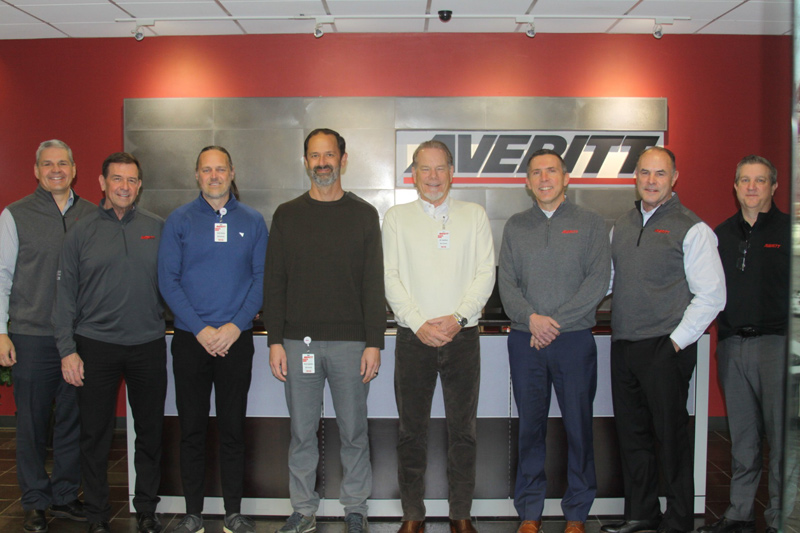 Whether the requirement involves time-critical overnight deliveries, temperature-controlled freight, lift-gate service, pool distribution, warehousing, or specialized equipment, Best Overnite Express focuses on finding solutions where others see obstacles. That operating model has enabled Best Overnite Express to develop long-term relationships with customers whose operations require more than a standard LTL solution.
The company began as a California-focused overnight carrier built around a simple belief that businesses would always need dependable freight service they could count on. Nearly four decades later, that commitment to reliability remains at the center of its growth, even as its network and capabilities have expanded far beyond their original footprint.
Built Around the Customer, Not the Process
That customer-first mindset is best captured by a philosophy that guides decision-making throughout the organization.
"We don't find customers that fit our mold. We find customers and mold to fit them," says Bill Applebee, president.
That philosophy influences everything from network design and equipment investments to pricing strategy and customer service.
For Best Overnite Express, transportation is not simply about moving freight from one location to another. It is about understanding the operational realities facing customers and building services that help them overcome obstacles. The company looks for opportunities where traditional transportation models fall short and develops practical solutions that others often overlook.
We don't find customers that fit our mold. We find customers and mold to fit them.
The overnight delivery program operating across California, Arizona, Nevada, and Utah illustrates this philosophy in action. By coordinating freight from multiple distribution centers and ensuring deliveries are completed before businesses open the following day, Best Overnite Express helps customers keep inventory available precisely when it is needed. Rather than offering a standard transportation service, in many cases, Best Overnite Express becomes an integrated part of the customer's daily distribution operation.
The same philosophy extends to warehousing and pool distribution programs. By strategically positioning freight closer to end markets before final delivery, Best Overnite Express helps customers improve transit times, create operational efficiencies, and better manage transportation costs throughout the western United States.
Investing in the Tools to Deliver Consistently
Delivering specialized solutions requires more than flexibility. It requires the infrastructure and resources necessary to execute consistently.
Over the last several years, Best Overnite Express has continued making strategic investments in equipment, facilities, technology, and personnel. As a fully asset-based carrier, the company maintains direct control over its operations, allowing it to uphold the service standards that have become central to its reputation.
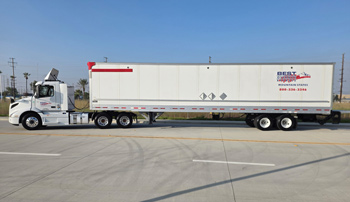
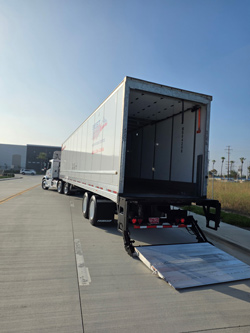
Its fleet includes everything from tractor-trailers and straight trucks to sprinter-sized vehicles, allowing the company to match equipment to the customer's operational requirements rather than forcing freight into a one-size-fits-all network. Equipment upgrades have included electric pallet jacks, liftgate-equipped trailers, and multiple trailer configurations designed to support unique delivery environments.
 Equally important has been the company's investment in physical infrastructure. In recent years, Best Overnite Express expanded its footprint into Arizona, Nevada, and Utah, opening facilities in Phoenix, Las Vegas, Reno, and Salt Lake City. The Salt Lake City operation also serves as a significant warehousing location, further enhancing the company's ability to support customers throughout the region.
These investments were made to strengthen service capabilities and position the company to better support customers operating across the western U.S.
"Our goal is not to be the biggest, but to provide the best possible services we can to our customer base,” says Corey Kelsey, tank commander.
Extending Reach Through Strategic Partnerships
While the western U.S. remains Best Overnite Express' operational stronghold, the company's reach extends far beyond its core markets.
Through exclusive strategic partnerships with regional carriers, Best Overnite Express is able to provide transportation solutions throughout North America, including Eastern Canada. This network allows customers to benefit from coast-to-coast reach while maintaining the responsiveness, accountability, and direct communication often associated with a regional carrier.
-
Our goal is not to be the biggest, but to provide the best possible services we can to our customer base.
The partnership strategy reflects a broader business philosophy: focus on what the company does best while aligning with organizations that share similar service standards. For customers, that translates into greater geographic reach without sacrificing reliability or communication.
The expansion also aligns with larger economic shifts taking place across the western U.S. As businesses continue to establish operations in states such as Arizona, Nevada, and Utah, Best Overnite Express has positioned itself to support increasingly interconnected supply chains throughout the region. By investing ahead of demand, the company has created capacity that allows it to accommodate growth while maintaining service quality.
 Technology That Supports Customer Relationships
As logistics operations become increasingly technology-driven, many transportation providers have moved toward automation as a replacement for customer interaction. Best Overnite Express has taken a more balanced approach.
The company has invested significantly in technologies that provide customers with greater visibility and easier access to information while also making it easier to integrate transportation data into their day-to-day operations. Through its digital platforms, Customers have access to real-time shipment visibility, proof of delivery, billing tools, delivery photos, and system integrations that simplify transportation management. Technology isn't valuable simply because it's new. It's valuable when it gives customers better visibility, better communication, and better decision-making.
However, Best Overnite Express’ leadership believes technology should enhance the customer experience rather than replace personal relationships.
The company continues to emphasize direct communication and accessible customer support, recognizing that freight may move on trucks, but transportation still runs on relationships. While customers increasingly appreciate self-service tools and real-time visibility, many still value the ability to speak with knowledgeable professionals who understand their operations and can respond quickly when challenges arise.
This balance between technology and personal service has become another distinguishing characteristic of the Best Overnite Express approach. Rather than choosing between efficiency and relationships, the company strives to deliver both.
"We generally look for opportunities with shippers or consignees that they don't think they're able to get done today and resolve that for them," says Applebee.
A Service-Driven Future
As Best Overnite Express approaches its 40th anniversary, the company continues to build on the principles that have guided it since 1987. Investments in people, equipment, facilities, and technology are creating new opportunities for growth, but leadership remains focused on the same objective that has defined the business for decades: delivering exceptional service, staying responsive, and solving transportation problems others may overlook.
In an industry where many carriers continue to standardize their operations, Best Overnite Express has taken a different approach: build around the customer instead of asking the customer to build around the carrier. Its willingness to customize solutions, invest in operational control, maintain strong customer relationships, and adapt around customer needs has helped establish the company as a trusted logistics partner across the western United States and beyond.
For customers seeking more than a conventional freight provider, Best Overnite Express offers something increasingly difficult to find: a transportation partner willing to adapt its operation to the customer's requirements rather than asking the customer to adapt to the carrier's limitations. After nearly four decades in business, that commitment continues to be one of the company's most valuable differentiators.
Evaluating Precision and Flexibility in LTL Freight Services
Less-than-truckload freight services have become a balancing act between predictability and adaptability. Executives responsible for transportation procurement face a recurring tension: standardized networks offer scale, yet often fail when shipments fall outside predefined lanes, schedules or handling conditions. This gap becomes visible in time-sensitive distribution models, multi-node fulfillment and specialized delivery environments where rigid carrier frameworks introduce delays, missed delivery windows or costly workarounds.
Consistency in transit performance remains a baseline expectation, yet it is no longer sufficient on its own. Shippers increasingly depend on partners that can sustain on-time execution while adjusting to shipment-specific constraints without introducing friction. This includes handling varied trailer configurations, accommodating temperature-sensitive loads, enabling after-hours delivery or supporting unattended drop-offs in distributed markets. A provider’s ability to adapt its service design to the customer’s operating model, rather than forcing alignment to fixed processes, often determines long-term viability.
Network reach also demands closer scrutiny. National coverage is commonly advertised, but true effectiveness lies in how seamlessly freight moves across regions without service fragmentation. Integrated partnerships and coordinated handoffs influence both transit reliability and visibility. Buyers are prioritizing providers that can maintain continuity across geographies while preserving accountability at each stage of movement, particularly when shipments traverse complex routes or require expedited handling.
Technology has moved from a supporting role to a central enabler of coordination. Digital connectivity between shipper and carrier is expected to simplify booking, tracking and exception management without adding administrative burden. The underlying expectation is not sophistication for its own sake, but clarity and control throughout the shipment lifecycle. Visibility must translate into actionable insight, allowing teams to respond quickly when conditions change.
Infrastructure investments further separate capable providers from transactional carriers. Warehousing integration, pool distribution and localized staging create opportunities to optimize delivery sequencing and reduce transit inefficiencies. These capabilities become critical when supporting high-frequency distribution models or ensuring early-morning inventory availability across dispersed locations. Equipment readiness, from lift-gate configurations to varied vehicle sizes, reinforces a provider’s ability to execute across diverse delivery environments without compromise.
Best Overnite Express aligns closely with these demands through a model built on adaptability and controlled execution. It has established a nationwide service footprint through a curated partnership network, enabling coast-to-coast coverage including Eastern Canada while maintaining coordinated oversight. Its approach emphasizes shaping solutions around shipper requirements, rather than limiting services to predefined offerings.
Its investment in equipment and facilities supports this positioning. A modern fleet equipped with varied trailer sizes, lift-gates and handling tools allows it to address specialized delivery conditions, while its warehousing presence in key western locations enables pool distribution and staged fulfillment. The company’s ability to execute unattended overnight deliveries across multiple states, ensuring inventory availability at the start of business hours, illustrates a level of service customization that many carriers are unwilling or unable to replicate.
For executives evaluating LTL partners, Best Overnite Express presents a disciplined yet flexible option. It combines consistent transit performance with a willingness to adapt service design, supported by infrastructure and partnerships that extend beyond standard carrier capabilities. This alignment positions it as a strong choice for organizations that require precision without sacrificing adaptability in complex freight environments.
...Read more
LTL Freight Services Info
Q1
What Are LTL Freight Services and When Are They Used?
LTL Freight Services allow multiple shipments from different customers to share truck capacity. This model is generally used when a shipment does not require an entire trailer but is too large or complex for parcel delivery. By consolidating freight, businesses can move palletized or specialized shipments while paying for the space and services they need. The right approach depends on shipment size, handling requirements, destination and delivery schedule.
Q2
How Does Best Overnite Express Support Regional and Long-Haul LTL Freight Needs?
Best Overnite Express provides LTL Freight Services through its asset-based regional carrier model and a wider network of service partners. Founded in 1987, the company operates service centers throughout California and extends its coverage through direct operations and partner alliances across the United States and Canada. This structure allows it to support local California shipments, western regional freight and longer-haul moves while maintaining a broader transportation network.
Q3
What Services Can Be Included with LTL Freight Transportation?
LTL Freight Services can include more than standard dock-to-dock transportation. Depending on operational requirements, providers may offer residential delivery, dedicated or unattended delivery, vendor consolidation, pool distribution and customer integration. These options help address situations where freight must move through a cross-dock, arrive before normal receiving hours or fit into an existing distribution process. The important consideration is whether the service model matches the shipment’s handling and delivery requirements.
Q4
Why Do Transit Time and Network Coverage Matter in LTL Shipping?
Reliable transit performance depends on how effectively LTL Freight Services connect pickup points, terminals, line-haul operations and final destinations. Coverage alone is not enough. Customers also need a network that can support predictable movement across the required service area. Strong terminal placement, clear routing and coordinated partner relationships can reduce unnecessary handoffs and improve shipment visibility. For time-sensitive freight, consistency in daily operations can be as important as the stated transit schedule.
Q5
How Can LTL Freight Services Help Manage Complex Distribution Requirements?
LTL Freight Services can support complex distribution needs through consolidation and flexible delivery options. Best Overnite Express uses vendor consolidation and pool distribution through its cross-dock and warehousing facilities to bring freight together before it moves onward. It also offers dedicated and unattended delivery options when delivery times need to match warehouse schedules. These services let the transportation plan fit operational needs instead of treating every shipment the same.
Q6
What Should Organizations Consider When Evaluating an LTL Freight Provider?
Organizations evaluating LTL Freight Services should look beyond freight rates. Key factors include coverage, reliable transit times, handling capabilities, delivery options and the provider’s ability to fit existing transportation workflows. Shipments with specific timing or distribution needs may require more flexible services. Customer integration can also improve coordination by linking freight activity with other operational processes. A practical evaluation should focus on how well the provider can meet the specific needs of each shipment.
Company :
Best Overnite Express
Management Bill Applebee, President and Corey Kelsey, Tank Commander
Description
Best Overnite Express is a privately held, asset-based LTL carrier specializing in customized transportation solutions across the western U.S. and beyond. For nearly four decades, the company has helped businesses overcome complex logistics challenges through flexible service models, strategic partnerships, modern infrastructure, and a customer-first approach.